
Categories
Gulf Coast Real EstatePublished January 6, 2026
2026 Galveston County Real Estate Forecast: What Buyers and Sellers Should Expect

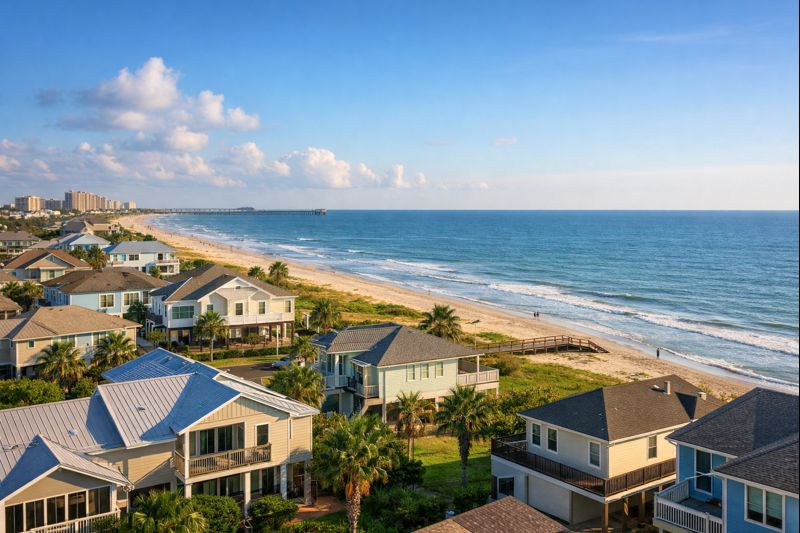
Market: Gulf Coast (Galveston County)
In 2026, Galveston County’s real estate market is most likely to feel more balanced than the peak years—with pricing and negotiation shaped by three forces: mortgage-rate direction, local inventory levels, and coastal ownership costs (especially insurance). If rates ease and inventory tightens, sellers regain leverage; if inventory remains elevated, buyers continue to negotiate—and overpriced listings sit longer.
What does 2026 hold in store for the real estate market in Galveston County?
- Expect a tug-of-war between affordability (rates) and inventory (supply): whichever moves first sets the tone.
- Pricing will stay “specific,” not universal: condition, location, elevation, and insurance profile will matter more than headlines.
- Buyers may still have leverage early if days-on-market stays elevated; leverage fades fast if rates drop and demand returns.
- Sellers who price correctly and prep well will still sell; “hope pricing” will get punished by longer DOM and reductions.
- Insurance is a deciding factor for many coastal purchases—get quotes before you fall in love with a home.
A 2026 forecast is never a single number. It’s a set of likely scenarios—because housing reacts to interest rates, inventory, and local cost-of-ownership. Right now, the data already shows a “slower” market environment in Galveston County: Zillow’s county dashboard reports an average home value around $313K and notes properties going pending in roughly ~69 days. FRED’s local housing inventory series also shows median days on market sitting around the high double-digits (roughly ~81 in recent reporting).
Separately, local reporting has described Galveston County as experiencing a correction after overheated demand, with some commentary suggesting the “buyer’s market” dynamics may not last indefinitely if rates fall and conditions normalize into 2026. Translation: timing and strategy matters more than predicting an exact price move.
The other big lever is borrowing costs. Rate expectations can change quickly, but by late 2025, macro coverage documented a broad shift toward easing among major central banks compared with the tightening cycle of 2022–2023. For housing, even modest rate declines can bring buyers back quickly—which can tighten inventory and firm up pricing.
“April is the best! When a set of clients were relocating to Galveston County for work, they knew nothing about the area. April took the time to guide them through different neighborhoods so the home they bought truly became their home. She demonstrated exceptional professionalism with both the buyers and me as the referring agent, keeping everyone informed every step of the way. April is a true advocate for her clients’ best interests.”
— Referring Agent
Key insight: Galveston County won’t move as one market in 2026
One of the biggest misconceptions is thinking “Galveston County” behaves like a single, uniform housing market. In reality, 2026 outcomes will vary based on:
- Micro-location: coastal vs. inland, flood exposure, elevation, proximity to water, and neighborhood desirability.
- Property type: condos, townhomes, single-family, new construction, and short-term-rental-friendly product can behave differently.
- Condition and replacement cost: homes needing updates compete poorly when buyers have choices and financing is tighter.
- Payment reality: the monthly payment (rate + insurance + taxes) is what most buyers qualify for—not the list price.
This is why two sellers can list the “same” price point and get totally different results in 2026: one has a clean insurance profile, strong condition, and smart pricing; the other asks the market to fund their optimism.
Important considerations for buyers and sellers heading into 2026
For buyers: underwrite the monthly payment, not just the price
In coastal-adjacent markets, insurance can move the needle. For example, TWIA (Texas Windstorm Insurance Association) publishes an average residential premium figure (around $2,480 as of mid-2025) as a reference point—your quote may be higher or lower based on coverage and construction details. The only safe approach is to get real quotes early and include a buffer for renewals.
- Do this early: request insurance quotes (wind/flood if applicable) before the option period ends.
- Stress test: run the payment at a slightly higher insurance premium than today.
- Negotiate smart: in slower pockets, you may win concessions, rate buy-downs, or repairs—if your offer is structured correctly.
For sellers: your 2026 success will be set by pricing and prep
If days-on-market remains elevated, the market will reward listings that feel “easy” to buy: clean condition, clear disclosures, and a price that matches current buyer behavior—not peak-year memories. County-level indicators like longer pending timelines and higher DOM are a warning: the market is selective.
- Price to your competition (active listings), not your neighbors’ old sale.
- Remove friction: repairs, receipts, clean inspection prep, and clear insurance/flood info reduce buyer hesitation.
- Plan for negotiation: credits and concessions may be normal if inventory stays high.
The 2026 swing factor: if rates drop, leverage can flip fast
When affordability improves, demand can come back quickly. Some local commentary expects the current buyer-leaning environment to shift toward more balanced conditions by mid-2026 if rates ease and inventory rebalances. That’s why both buyers and sellers should treat 2026 as a year where the “right move” depends on your timeline—not the headlines.
FAQ
Will Galveston County home prices go up in 2026?
They can, but it won’t be automatic. Watch rates, inventory, and payment-sensitive costs (insurance/taxes). If demand returns faster than supply, prices firm. If inventory stays elevated, pricing remains competitive—especially for homes that aren’t turnkey.
Should I wait until 2026 to buy in Galveston County?
Only if waiting improves your personal math: payment, down payment, job stability, and timeline. If you can negotiate well today (price, concessions, repairs) and the payment fits comfortably, “waiting” can be more expensive if rates drop and competition returns.
What should sellers do now if they’re targeting a 2026 sale?
Start early: fix deferred maintenance, document improvements, understand your insurance/flood profile, and track the listings you’ll compete against. In a selective market, preparation is leverage.
Next Steps
If you want a buyer-or-seller game plan built around your timeline (not generic predictions), schedule a quick planning call here:
https://tidycal.com/aprilaberlerealtor

April Aberle
REALTOR ® | Mortgage Originator | Homes for Heroes Affiliate | April Aberle | REMAX Crossroads Realty
or another way