
Categories
Horse PropertiesWhat is the horse property market like in Santa Fe, TX right now?
Santa Fe, TX is one of the strongest pockets for equestrian properties in Galveston County, with a mix of raw acreage and fully equipped ranch operations available in a county-wide market that has shifted in buyers' favor as of mid-2026. According to Realtor.com's August 2026 report, Galveston County is a buyer's market where homes are selling below asking on average, giving acreage buyers more negotiating leverage than they've had in recent years. Horse properties are niche inventory, so they don't always move with the same rhythm as suburban homes, but the broader conditions are working in buyers' favor.Key Takeaways
- Galveston County had a median sale price of $351K and 531 homes sold in July 2026, per Redfin, acreage and horse properties price differently because land, barns, and improvements add material value above county medians.
- Realtor.com reported homes in Galveston County sold 1.62% below asking in August 2026, signaling real negotiating room for buyers, including those pursuing horse property.
- Active turnkey inventory near Santa Fe can include arenas, multiple stables, cross-fenced pastures, and private tack rooms, as illustrated by a 47-acre ag-exempt ranch listed on Land Broker MLS near FM 2004.
- Ag exemptions are available in Galveston County and can significantly reduce the annual property tax burden on qualifying horse properties, confirm current qualification requirements with the county appraisal district.
- Days on market for county properties ranged from 42 median days to pending (Zillow, July 2026) to 74 median days on market (FRED, August 2026), reflecting different methodologies, either way, acreage properties are not flying off the shelf.
Why does Santa Fe attract horse property buyers in Galveston County?
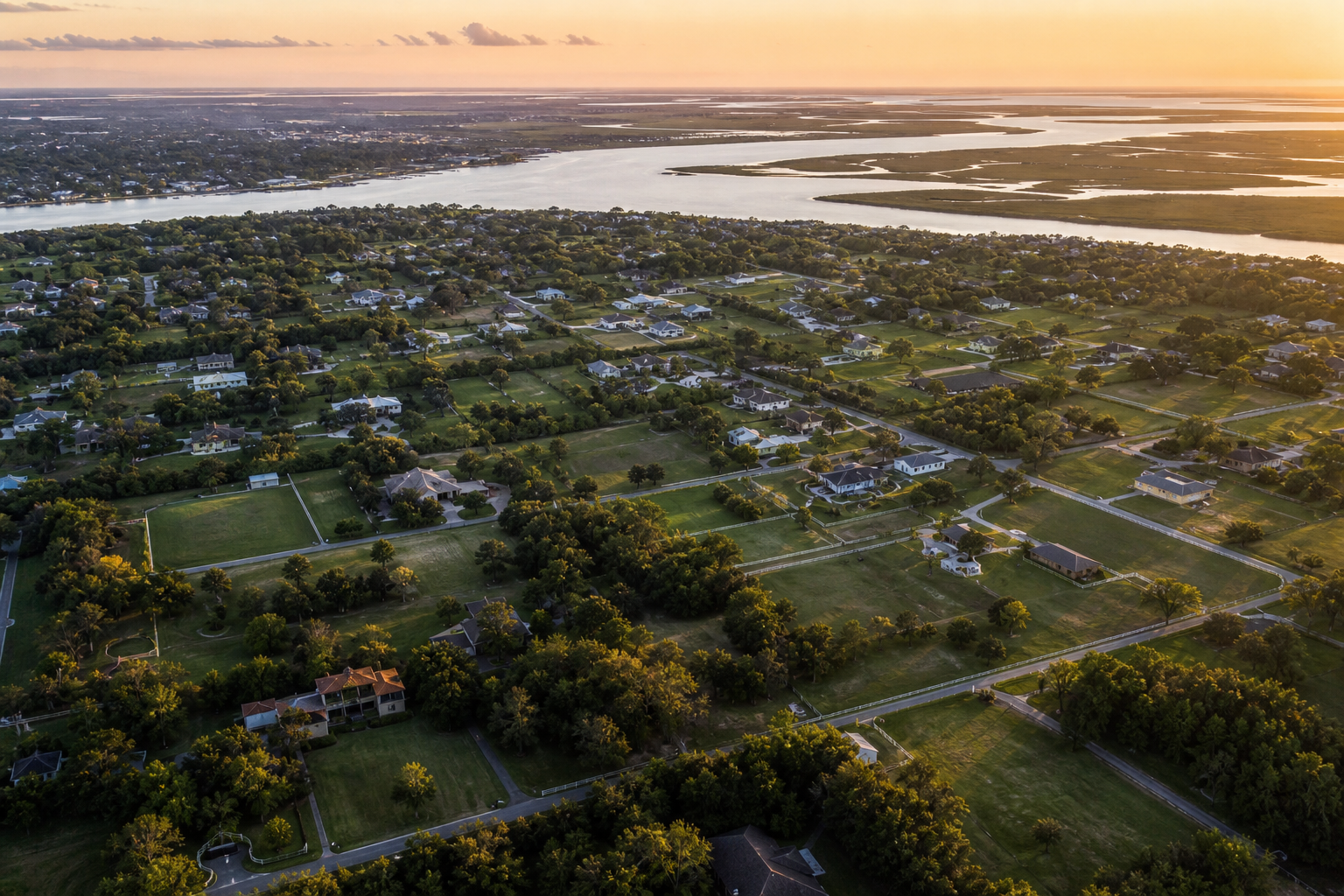
Santa Fe occupies a sweet spot that's hard to replicate elsewhere in Galveston County. It sits far enough from the coast to avoid the most aggressive flood-zone constraints that affect waterfront and near-beach properties, while staying close enough to Houston and the greater Gulf Coast metro that commutes remain workable. That combination, open land, reasonable elevation, and proximity to a major metro, is exactly what horse owners are looking for.The area's rural character has held up even as surrounding communities have developed. You can still find properties with enough acreage to run a small operation without driving hours from civilization. For buyers who want a working property rather than a weekend hobby farm, that matters.
I've worked with buyers who looked at horse properties across Southeast Texas and kept coming back to Santa Fe because the infrastructure-to-price ratio is hard to beat. A comparable setup closer to Houston proper would cost significantly more, and properties further south run into coastal insurance complexity that changes the math on ownership entirely.
What does turnkey horse property inventory look like here?
The Santa Fe area has genuine ranch-caliber inventory. A recent example listed on Land Broker MLS near FM 2004 showed a 47.17-acre ag-exempt property with cross-fenced pastures, a small pond, multiple pens, a high fence, a mile-long oval racetrack, a 280' x 120' stable with a lighted covered arena, a 210' x 55' stable, a private tack room, bleachers, and a storage garage. That's not raw land, that's a fully operational equestrian facility.Not every listing is at that scale, of course. The market includes smaller parcels with basic fencing and a modest barn, mid-size properties with one or two covered stalls, and everything up to large ranch operations like the one above. The point is that Santa Fe has depth across the spectrum, which means buyers at multiple price points can find something worth evaluating.
How does the Santa Fe market compare with other Galveston County areas for acreage?
Santa Fe competes with areas like Alvin (in Brazoria County) and parts of unincorporated Galveston County for horse-property buyers, but it holds a distinct advantage in land availability and rural character relative to its commute distance. If you're comparing Santa Fe directly to Texas City or La Marque, the differences in lot size and agricultural zoning are significant, those areas skew suburban, while Santa Fe has maintained a working-land identity. For a deeper look at how Santa Fe compares with a neighboring community, this comparison of Texas City and Santa Fe breaks down the real estate differences in 2026.What should buyers know about the Galveston County market before buying horse property?
The county-wide picture in mid-to-late 2026 is one of the more buyer-friendly environments in recent memory. Redfin's data through July 2026 showed a median sale price of $351K, down 3.8% year over year, with 54 days on market. Zillow's July 2026 index put the county home value at $321,294, down 1.8% over the prior year, with 3,576 homes for sale and a median of 42 days to pending. The Federal Reserve Bank of St. Louis reported 74 median days on market for Galveston County in August 2026, a different methodology, measuring the full period from list to contract rather than just to pending.What those numbers tell you is that inventory is ample and sellers are negotiating. Realtor.com's August 2026 data showed Galveston County homes selling at 98% of list price on average, with buyers getting roughly 1.62% off asking. For horse properties specifically, the buyer pool is narrower than for a standard suburban home, which means sellers may have more flexibility, but it also means comparable sales are harder to find, and pricing can be less predictable.
The Santa Fe median listing price was $369,725 at $201 per square foot as of August 2026, per Realtor.com, but remember that figure blends all property types. An acreage horse property with substantial improvements will price on its own merits, and the only way to know what a specific parcel is worth is to run a proper market analysis that accounts for land size, water, fencing, and structures. That's exactly the kind of work I do before a buyer makes an offer.
| Market Metric | Figure | Source / Period |
|---|---|---|
| Galveston County median sale price | $351,000 | Redfin, July 2026 |
| Galveston County home value index | $321,294 | Zillow, July 31, 2026 |
| Santa Fe median listing price | $369,725 | Realtor.com, August 2026 |
| County sale-to-list price ratio | 98% | Realtor.com, August 2026 |
| Median days to pending (county) | 42 days | Zillow, July 2026 |
| Median days on market (county) | 74 days | FRED, August 2026 |
| Year-over-year price change (county) | -3.8% | Redfin, three months ending July 2026 |
What due diligence matters most on a horse property purchase?
Acreage properties require a different due-diligence checklist than a standard home purchase. Before you make an offer on a horse property in Santa Fe, here's what I walk every buyer through:- Flood zone and drainage: Even inland Galveston County properties can carry flood risk. Confirm the FEMA flood zone designation and review the elevation certificate if one exists. Flood insurance costs and lender requirements vary significantly based on zone classification.
- Ag exemption status: If the property carries an agricultural exemption, verify it with the Galveston Central Appraisal District and understand the requirements to maintain it. Losing an ag exemption can substantially increase the annual tax burden, and a rollback tax applies if the land use changes.
- Well and septic condition: Most horse properties in Santa Fe are on private well and septic. Get both inspected independently, not just as part of a general home inspection.
- Fencing and perimeter integrity: Walk the fence line. Repairs to cross-fencing, high fencing, or perimeter fencing on a large parcel can run into real money quickly.
- Structure condition: Barns, arenas, and stables in Southeast Texas face significant humidity and weather exposure. A general inspector may not be qualified to assess a large covered arena, consider a structural engineer or experienced barn contractor for major improvements.
- Water rights and pond/tank status: If the property includes a pond or tank, confirm ownership and any restrictions on use or maintenance.
- Easements and access: Rural properties sometimes carry utility easements, pipeline easements, or shared-access agreements that don't show up in a casual review. The title company will catch these in the commitment, but know to ask about them early.
Frequently Asked Questions
Are horse properties in Santa Fe, TX a good investment right now?
Galveston County's buyer-favorable conditions in 2026 mean buyers have more negotiating room than they've had in recent years, with homes selling roughly 1.62% below asking on average as of August 2026, per Realtor.com. Horse properties are niche inventory with a narrower buyer pool, which can work in a buyer's favor at purchase but means you should go in with realistic expectations about resale timelines. Whether a specific property is a good investment depends on the land, improvements, ag-exemption status, and your intended use, a conversation worth having before you make an offer.How much acreage do you need for a horse property in Galveston County?
Texas A&M AgriLife Extension generally recommends a minimum of 1.5 to 2 acres per horse for adequate grazing and turnout, though properties with supplemental hay and managed pasture rotation can work on somewhat less. In practice, most functional horse properties in the Santa Fe area run from 5 acres on the smaller end to 50-plus acres for full ranch operations. The right acreage depends on how many horses you plan to keep, whether you want a working operation or a personal property, and what the land's carrying capacity actually is, not just what the listing says.Is ag exemption available on horse properties in Galveston County?
Yes, agricultural exemptions are available in Galveston County for properties that meet the Galveston Central Appraisal District's qualifying use requirements, which can include horses used in production agriculture or as part of a breeding or training operation. The exemption is based on the land's agricultural use, not simply the presence of horses, so personal-use horse keeping may or may not qualify depending on how the property is classified. Always verify the current exemption status and qualifying criteria directly with the appraisal district before closing, and understand the rollback tax implications if use changes after purchase.Are horse properties selling faster or slower than regular homes in Galveston County?
County-wide, the most recent data shows median days on market ranging from 42 days to pending (Zillow, July 2026) to 74 days on market (FRED, August 2026), reflecting different measurement approaches. Horse and acreage properties typically sit longer than suburban homes because the buyer pool is smaller and financing can be more complex, lenders treat acreage and rural properties differently than standard residential purchases. That's not a negative; it means buyers have time to do proper due diligence rather than feeling rushed.What horse-property features are most valuable in Southeast Texas?
In Southeast Texas's heat and humidity, covered infrastructure matters more than in drier climates, a lighted covered arena, covered stalls, and adequate ventilation in barns and stables add real value and usability year-round. Cross-fencing for pasture rotation, a reliable water source (well with adequate output or a pond), and a private tack room with climate control are consistently high on buyers' lists. Ag-exempt status, paved or all-weather road access, and a residential structure in good condition round out the features that move the needle on both usability and resale value.What should buyers check before purchasing an acreage horse property in Santa Fe?
The most important items are flood zone classification, ag exemption status and rollback tax exposure, well and septic condition, fence-line integrity, and the structural condition of any barns or arenas. Buyers should also review the title commitment carefully for easements and access agreements, and confirm that the property's water supply is adequate for both household and livestock use. Working with a title company that handles rural transactions regularly is important, they'll catch issues that a standard residential closing process might not flag.If you're seriously considering a horse property in Santa Fe, the best next step is a conversation before you start touring. Knowing what questions to ask, and what red flags to watch for, before you fall in love with a property saves a lot of time and money.
Ready to explore horse properties in Santa Fe or the surrounding Galveston County area? I specialize in acreage and equestrian properties across Southeast Texas, and I know this market's inventory, quirks, and financing landscape well. Schedule a consultation and let's talk through what you're looking for.
Equal Housing Opportunity. April Aberle is licensed in Texas as a Real Estate Sales Agent, regulated by the Texas Real Estate Commission (TREC). This article is general information only and is not legal, tax, or financial advice. Verify your specific numbers and situation with your title company, tax advisor, or lender. TREC Consumer Protection Notice | TREC Information About Brokerage Services. Each office is independently owned and operated.