
Categories
GalvestonPublished December 7, 2025
The Real Cost of Living in Galveston, TX: 2025 Guide

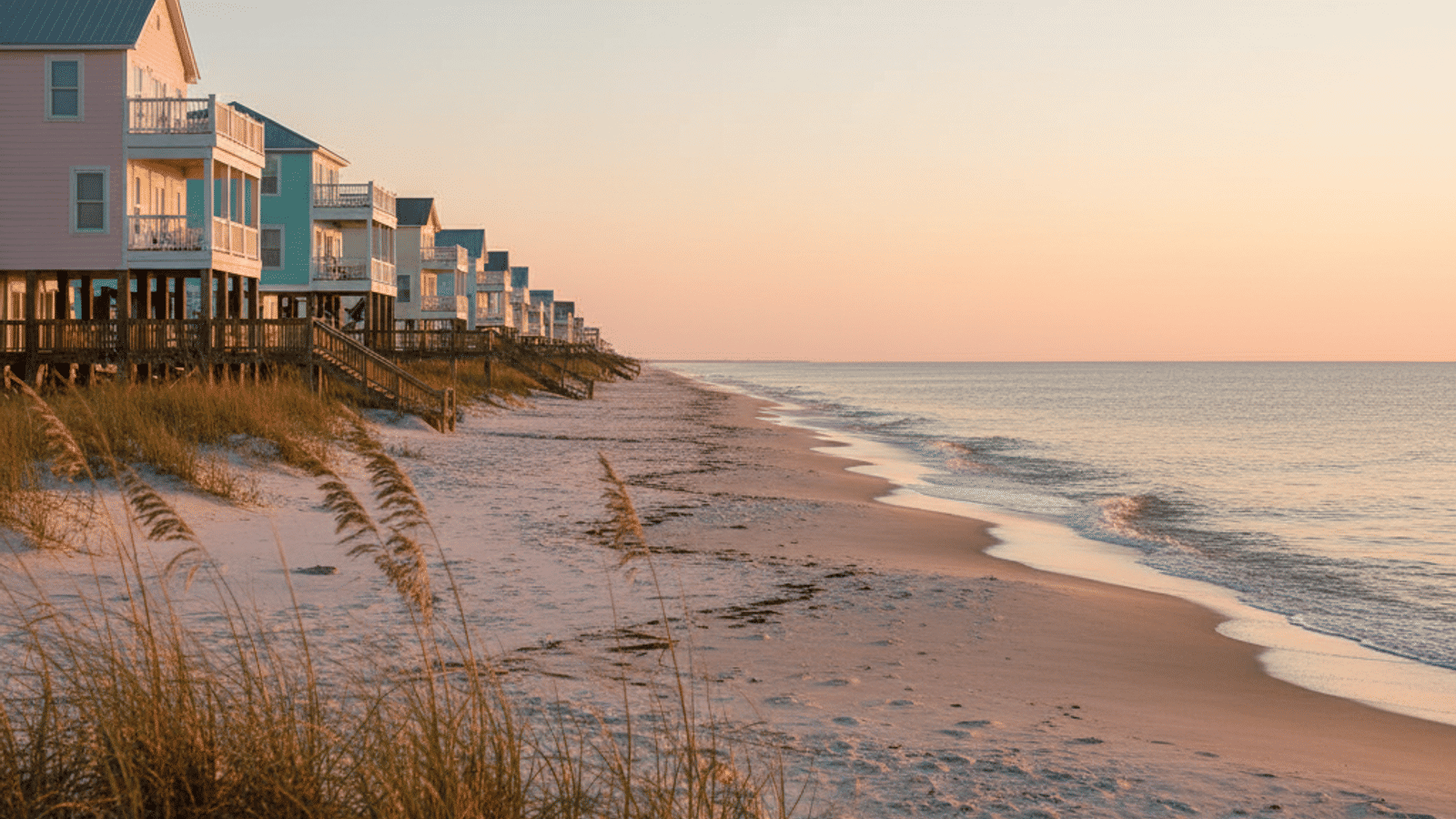
There is a specific allure to living on "Island Time." You get the gulf breeze, the historic architecture, and the slower pace of life without the astronomical price tag you’d find in California or Florida beach towns. If you are thinking about buying in Galveston, you are likely drawn to the idea of affordable coastal living.
However, sticker prices on the island can be deceiving. While the listing prices for homes might look incredibly attractive compared to the national average, the real cost of living here is defined by what you don't see on the Zillow listing: insurance, maintenance, and taxes. As a local, I can tell you that living here is absolutely worth it, but you need to go in with your eyes wide open regarding your monthly budget.
Is Galveston Expensive? A General Overview
When people ask if Galveston is expensive, the answer is usually "No, but…" Overall, the cost of living index here sits right around or slightly below the national average (roughly 96 to 100 on a scale where the US average is 100).
If you are coming from the East or West Coast, Galveston will feel like a bargain. If you are coming from rural Texas, it might feel a bit pricey. The dynamic here is unique:
- Income Tax Savings: Like the rest of Texas, there is no state income tax, which puts more money back in your pocket immediately.
- The Coastal Premium: You pay a premium for housing-related expenses (insurance and taxes) that you wouldn't pay on the mainland.
- Sales Tax: Expect to pay 8.25% on most purchases (combined state and local), which is standard for the region.
Housing Costs: Renting vs. Buying on the Island
The Galveston housing market here is split into two distinct personalities: the "In Town" market (Historic East End, Midtown) and the "West End" market (beach houses on stilts).
If you are looking at homes in Galveston, you will notice that median home prices generally range between $350,000 and $450,000. However, this varies wildly. A historic cottage in the East End might list for $375,000, while a canal-front home on the West End can easily command $700,000 or more.
For renters, the market can be tricky. Because Galveston is a major tourist destination, many landlords prefer short-term vacation rentals (Airbnb/VRBO) over annual leases. This creates a scarcity of long-term options, driving prices up slightly.
- One-bedroom apartments: Generally run $1,100 to $1,400 per month.
- Three-bedroom homes: Expect to pay $1,800 to $2,500+ per month.
If you are planning to rent, start your search early, especially if you are looking for apartments for rent during the peak summer season when inventory is tightest.
The Hidden Costs: Insurance and Property Taxes
This is the most important section of this guide. If you only remember one thing, let it be this: your mortgage principal and interest are only part of the story.
Because we are on a barrier island in the Gulf of Mexico, insurance is not optional—it’s a lifestyle requirement.
Property Taxes
Texas has high property taxes to offset the lack of income tax. In Galveston County, you should budget for a tax rate of approximately 2.2% to 2.8% of your assessed value. On a $400,000 home, that is roughly $9,000 to $11,000 a year in taxes alone.
Insurance (The Big Three)
When buying here, you aren't just buying a standard homeowner's policy. You are usually piecing together three different policies:
- Windstorm Insurance: Most mortgage lenders require this. It is typically handled through TWIA (Texas Windstorm Insurance Association).
- Flood Insurance: Almost the entire island is in a flood zone. However, costs vary heavily depending on if you are in an "X Zone" (lower risk, protected by the Seawall) or a "VE Zone" (higher risk, West End or beachside).
- General Hazard: Covers fire, theft, and liability.
Combined Insurance Costs: For a typical single-family home, you should budget anywhere from $2,000 to $6,000+ annually for these policies combined.
Salt Air Maintenance
Salt air is corrosive. It eats outdoor furniture, rusts cars, and shortens the lifespan of HVAC units. You should budget about 10% more for general home maintenance here than you would on the mainland to keep up with exterior paint and rust prevention.
Utility Costs in Galveston
Utilities on the island are comparable to the rest of Texas, with one major caveat: humidity management.
Texas has a deregulated electricity market, meaning you have the "Power to Choose" your provider. This allows you to shop around for competitive rates per kilowatt-hour. However, usage is the real driver of cost here. From May through October, air conditioners run almost non-stop to combat the heat and humidity.
- Average Energy Bill: Expect $150 to $250 per month for a standard home, though this can easily spike over $300 in August if your home isn't well-insulated.
- Water/Sewer/Trash: These are municipal services usually bundled together. A typical household bill runs $70 to $100 monthly.
- Internet: Major providers like Comcast/Xfinity and AT&T cover the island well, with standard national pricing.
Food and Grocery Expenses
When it comes to filling the fridge, your costs will largely mirror the national average. We have the standard big-box options—Kroger, Randall's, and Walmart—where the grocery index sits around 98 (just below the national average of 100).
However, locals have a secret weapon for lowering food costs: fresh seafood. Instead of buying frozen fish at the supermarket, you can head to places like Katie's Seafood Market or the chaotic but wonderful fresh markets at the wharves. Buying shrimp and snapper straight off the boat is often cheaper (and infinitely better) than grocery store prices.
Dining out is a tale of two cities. If you eat on the Seawall or The Strand, you are paying "tourist prices" (think $50 to $80 for a dinner for two). If you eat where the locals eat—tucked away in the neighborhoods or down the island—prices drop significantly.
Transportation and Commuting Costs
Galveston is fairly car-dependent. While we do have the Island Transit system with buses and the charming rail trolleys, they aren't comprehensive enough for most daily commuters.
Gas prices usually align with the Texas average, which is historically lower than the national average—expect to pay around $2.80 to $3.20 per gallon, though this fluctuates.
The biggest transportation factor to consider is the commute. Many residents live here but work in Houston or the petrochemical corridor on the mainland. This means driving the I-45 Causeway daily.
- Commute Cost: It’s about 50 miles to downtown Houston. That adds wear and tear to your vehicle and significant fuel costs.
- Vehicle Care: As mentioned earlier, frequent car washes are mandatory to keep the salt off your undercarriage.
- The Ferry: The Galveston-Port Bolivar Ferry is free, but it costs you time. It's a great amenity for day trips, but tough to rely on for a daily commute due to wait times.
Healthcare and Medical Access
One of the massive perks of living here is the University of Texas Medical Branch (UTMB). Having a Level 1 trauma center and a major teaching hospital right on the island is a game-changer for cost of living.
In many coastal towns, you have to travel (and pay for gas) to see specialists. Here, the density of doctors and specialists is high. Generally, healthcare costs here index around 95, slightly below the national average, thanks to this accessibility.
Galveston vs. Houston: Cost Comparison
Since many people decide between the island and the big city, let's look at Galveston vs Houston.
- Housing Price: You can often get more square footage for your money in Galveston compared to Inner-Loop Houston.
- Monthly Payment: Once you add the wind/flood insurance premiums to a Galveston mortgage, the monthly payment often evens out with a pricier Houston home that has lower insurance.
- Lifestyle Value: In Houston, you pay for proximity to jobs and culture. In Galveston, you pay for the beach and a walkable, small-town community feel.
- Risk Profile: Houston deals with flooding from rain; Galveston deals with storm surge. Both require flood insurance, but Galveston's rates for windstorm coverage are the differentiator.
Income and Economic Opportunities
To get a realistic sense of what it takes to live comfortably here, it helps to know what drives the local economy. On Galveston Island, the big anchors are UTMB, the Port of Galveston, and the steady flow of tourism that supports restaurants, shops, and service jobs.
The median household income hovers around $50,000 to $55,000. However, wages in the service and tourism industry are highly seasonal. Servers and bartenders make excellent money in the summer and lean money in the winter. Consequently, we are seeing a surge in remote workers relocating to the island—bringing big-city salaries to a place with a relaxed, coastal pace of life.
Frequently Asked Questions
How much do you need to make to live comfortably in Galveston?
To live comfortably as a homeowner, a household income of $75,000 to $85,000 is a safe baseline. This accounts for the higher insurance premiums and property taxes. Renters can likely manage comfortably on slightly less, roughly $55,000 to $65,000, depending on lifestyle.
Is insurance expensive in Galveston?
Yes, it is generally higher than on the mainland. You should budget between $2,000 and $6,000 annually for combined Windstorm (TWIA), Flood, and Homeowner's policies. The exact cost depends heavily on your home's elevation and its proximity to the Gulf.
Are utilities higher in Galveston than Houston?
They are comparable, but humidity can drive usage up. Because the salt air and humidity are constant, air conditioning systems work harder and longer here than in drier climates, potentially pushing summer electric bills slightly higher than a similar-sized home inland.
Is it cheaper to rent or buy in Galveston?
In the short term, renting is often cheaper because you avoid the direct hit of maintenance and insurance deductibles. However, buying offers long-term stability against rising rents, which is a common issue in a market driven by vacation rentals. If you plan to stay more than 5 years, the Galveston real estate market usually offers a better return on investment.

April Aberle
REALTOR ® | Mortgage Originator | Homes for Heroes Affiliate | April Aberle | REMAX Crossroads Realty
or another way