
Categories
GalvestonPublished September 7, 2026
Buying Real Estate in Galveston, TX vs Corpus Christi: 2026 Cost Comparison

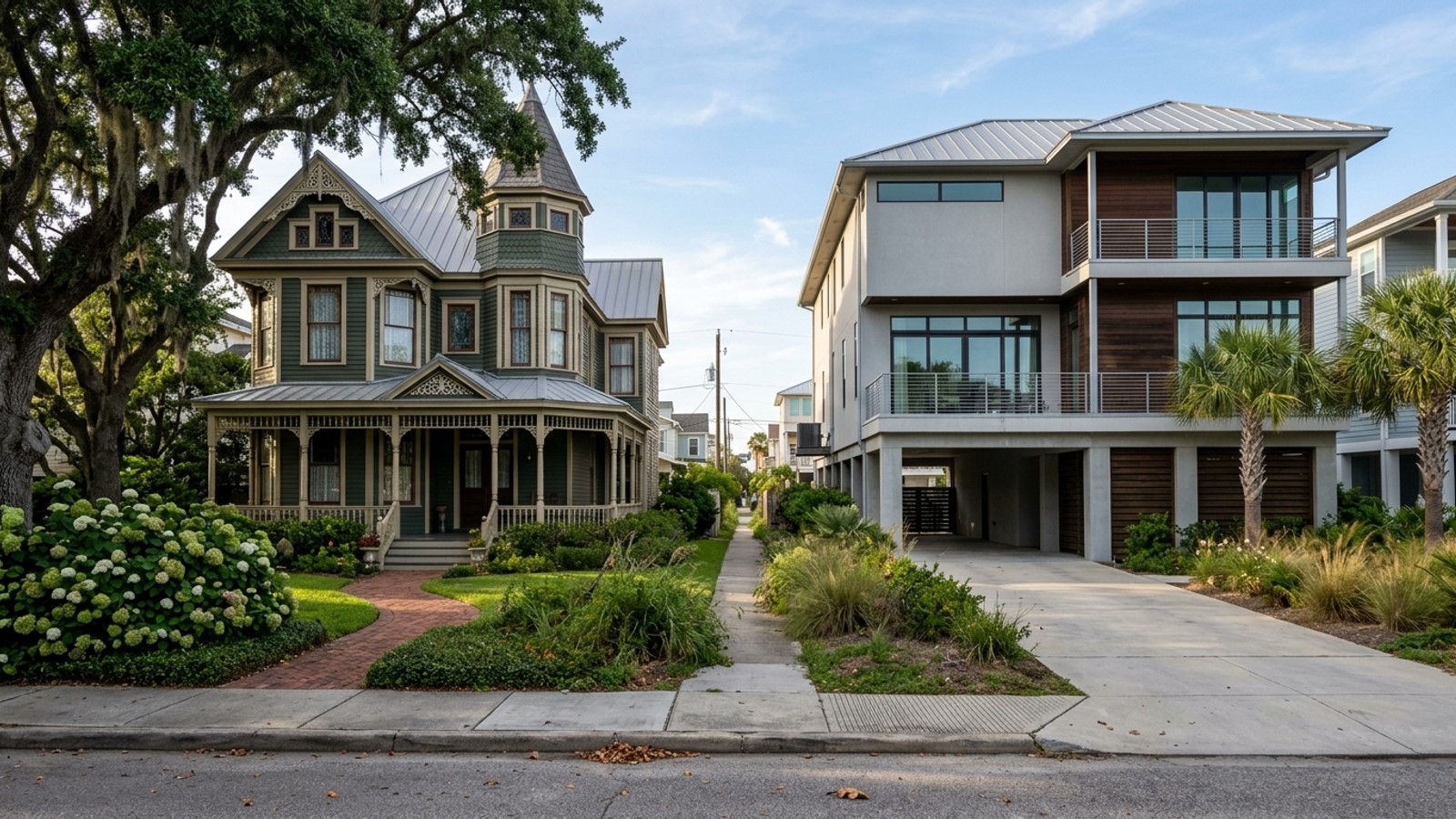
If you're searching the Texas Gulf Coast and considering living in Galveston, TX or Corpus Christi, you're already asking the right question. Choosing between a home in Galveston, TX vs Corpus Christi means getting into the details - housing costs, insurance requirements, highway access, and how each city actually functions as a place to live or invest. Both offer waterfront properties and Gulf of Mexico access, but their local economies and real estate dynamics are genuinely different, and those differences matter when you're writing a check.
Galveston runs on its relationship with the Houston Metro. It draws commuters, second-home buyers, and weekend visitors from the city in a way that shapes everything about its market. Corpus Christi is its own thing - a standalone regional economy further south that doesn't depend on another major metro to sustain its real estate values. That geographic reality shows up in median prices, inventory, and the types of homes you'll actually find available.
Comparing the Housing Markets
Recent MLS data puts the median sale price for a home in Galveston at roughly $381,500. There are about 1,044 available homes in inventory, properties are sitting an average of 76 days on the market before selling, and the sale-to-list price ratio is running around 95% - which tells you there's real room to negotiate if you come in prepared.
Corpus Christi is a lower entry point. Redfin reports the median sale price heading into the summer of 2026 at roughly $270,000. Zillow's home value index puts the typical value even lower, around $218,988 - though that number uses a different calculation methodology than closed sale prices, so don't mix the two figures when you're trying to compare apples to apples.
Home Prices and Market Pace
The price gap isn't random. Galveston's higher median reflects Houston proximity and a strong vacation-property market pulling values up. Year-over-year as of mid-2026, Galveston property values have climbed about 9.6%. Buyers there have roughly 10.8 months of housing supply to work with, which gives you time to look at multiple properties and think before you move.
In both markets, waterfront locations and newer construction command a premium over older, inland homes. That's not a surprise on the Gulf Coast, but it's worth keeping in mind when you're comparing list prices that look similar on paper.
Property Styles and Architecture
Galveston's housing stock is genuinely varied - historic Victorian homes, standard single-family houses, and high-rise condominiums all coexist on the island. The older inventory has weathered decades of coastal conditions, while newer elevated homes are built to modern codes. If a historic district matters to you, Galveston has architectural styles that are hard to find anywhere further down the coast.
Corpus Christi leans toward traditional single-family homes and mid-century builds. Waterfront properties exist there too, but the character of the stock is different.
Taxes, Insurance, and Ownership Costs
Property taxes are where coastal Texas ownership gets complicated fast, and you need to look at the full picture - not just the city rate.
Galveston set its municipal property tax rate at $0.4302 per $100 of valuation for the 2025 tax year. Stack in county, school district, and special district taxes, and the median effective rate lands around 1.72%. Depending on which school district your property falls in, total combined rates in Galveston County can range from 1.58% all the way to 2.8%.
Corpus Christi's municipal rate for 2025-26 is $0.599774 per $100 of valuation. The median effective rate for Corpus Christi properties runs about 2.11%, with major taxing entities combining for roughly $2.21 per $100 of assessed value.
Base Homeowners Coverage
Standard homeowners policies on the Texas Gulf Coast routinely exclude wind, hail, and flood damage. That means lenders require a base policy - referred to as an ex-wind policy - covering fire, theft, and liability, and then you layer coverage on top of that.
For a home with $300,000 in dwelling coverage, Galveston homeowners are paying an average of $7,953 annually just for that base policy. Before you start running numbers on what you can afford, that figure needs to be in your monthly budget.
Windstorm and Flood Insurance Rules
Galveston sits in a Tier 1 coastal county, which means windstorm coverage must come through the Texas Windstorm Insurance Association (TWIA). Average TWIA premiums run between $2,400 and $2,480 per year, and the dwelling cap for 2026 policies is $1,773,000.
Flood insurance is mandatory for federally-backed mortgages in high-risk zones. In Galveston County, flood policies average $992 to $1,199 per year - though coastal properties can easily push past $3,000 annually. There's also a specific trigger worth knowing: any home built or substantially altered after September 1, 2009, in flood zones V, VE, or V1-30 must carry National Flood Insurance Program (NFIP) coverage to even qualify for TWIA windstorm coverage.
Put it all together, and the full three-policy stack for a typical Galveston island home runs roughly $5,000 to $11,000 per year. That's not a footnote - that's a real line item in your ownership cost.
Highways, Commutes, and Coastal Recreation
Galveston connects to the Houston Metro via Interstate 45. That highway is the primary artery for residents commuting into the city and for travelers heading to major airports. It's what keeps Galveston tied economically to Houston rather than functioning as a self-contained community.
Corpus Christi connects to San Antonio via Interstate 37, but the dynamic is different. Corpus Christi is its own standalone economic center - residents generally work within the city or at the nearby port facilities, and daily employment doesn't depend on plugging into another major metro.
State Parks and Beaches
Galveston Island State Park sits right on the island, offering beachside camping, hiking, and kayaking. The seawall adds miles of paved beachfront for walking and cycling. It's accessible, which is part of what makes the market work for weekend visitors.
Corpus Christi's outdoor access runs in a different direction - Mustang Island State Park and the Padre Island National Seashore offer miles of natural, largely undeveloped coastline, boating facilities, and fishing. If you're drawn to buyers who want something that feels less built-up, that's the pull the Corpus Christi area has.
Frequently Asked Questions
Is Galveston, TX or Corpus Christi better for buying a short-term vacation rental property?
It depends on your target renter and your budget. Galveston pulls high volumes of weekend visitors from the Houston Metro and has the proximity to support that, but you're starting at a median home price around $381,500. Corpus Christi's entry point is lower, around $270,000, though it functions more as a standalone economy than as a quick weekend escape for a massive neighboring city.
How do windstorm and flood insurance premiums in Galveston, TX compare to Corpus Christi?
Both cities have coastal insurance requirements, but Galveston carries specific mandates as a Tier 1 coastal county. You'll need a three-policy stack - base, TWIA windstorm, and NFIP flood - that totals between $5,000 and $11,000 annually. And if your property was built or altered after September 1, 2009, in a V, VE, or V1-30 flood zone, you must carry NFIP flood insurance to even qualify for TWIA windstorm coverage.
How does proximity to Houston impact Galveston, TX real estate prices compared to the Corpus Christi market?
Galveston's I-45 connection to Houston drives its values above Corpus Christi's. The median sale price in Galveston is roughly $381,500, supported by Houston-based buyers purchasing second homes and commuter properties. Corpus Christi relies on a standalone economy connected to San Antonio via I-37, which produces a lower median around $270,000.
Are there different coastal building codes and permitting steps to follow when building a home in Galveston, TX versus Corpus Christi?
Yes. Galveston's Tier 1 coastal county status means new construction and substantial alterations must meet specific Texas Windstorm Insurance Association (TWIA) building codes. Homes built in flood zones V, VE, or V1-30 after September 2009 must meet those codes and carry National Flood Insurance Program coverage to secure windstorm insurance.
Which coastal housing market historically offers faster property value appreciation, Galveston or Corpus Christi?
Recent data favors Galveston for short-term growth. As of mid-2026, the median sale price in Galveston rose approximately 9.6% year-over-year. Corpus Christi saw a more modest 1.8% year-over-year increase over a similar period.
What happens if a major storm hits: is hurricane risk and property vulnerability higher in Galveston, TX or Corpus Christi?
Both cities sit on the Texas Gulf Coast and face hurricane risk - which is exactly why standard homeowners policies in both markets exclude wind and flood damage. Galveston's position as a barrier island places it in a Tier 1 coastal county, with strict TWIA windstorm coverage requirements and mandatory NFIP flood insurance for any federally-backed mortgage in high-risk zones.

April Aberle
REALTOR ® | Mortgage Originator | Homes for Heroes Affiliate | April Aberle | REMAX Crossroads Realty
or another way