
Categories
GalvestonPublished January 20, 2026
Galveston vs Texas City: Coastal Living or Mainland Convenience?

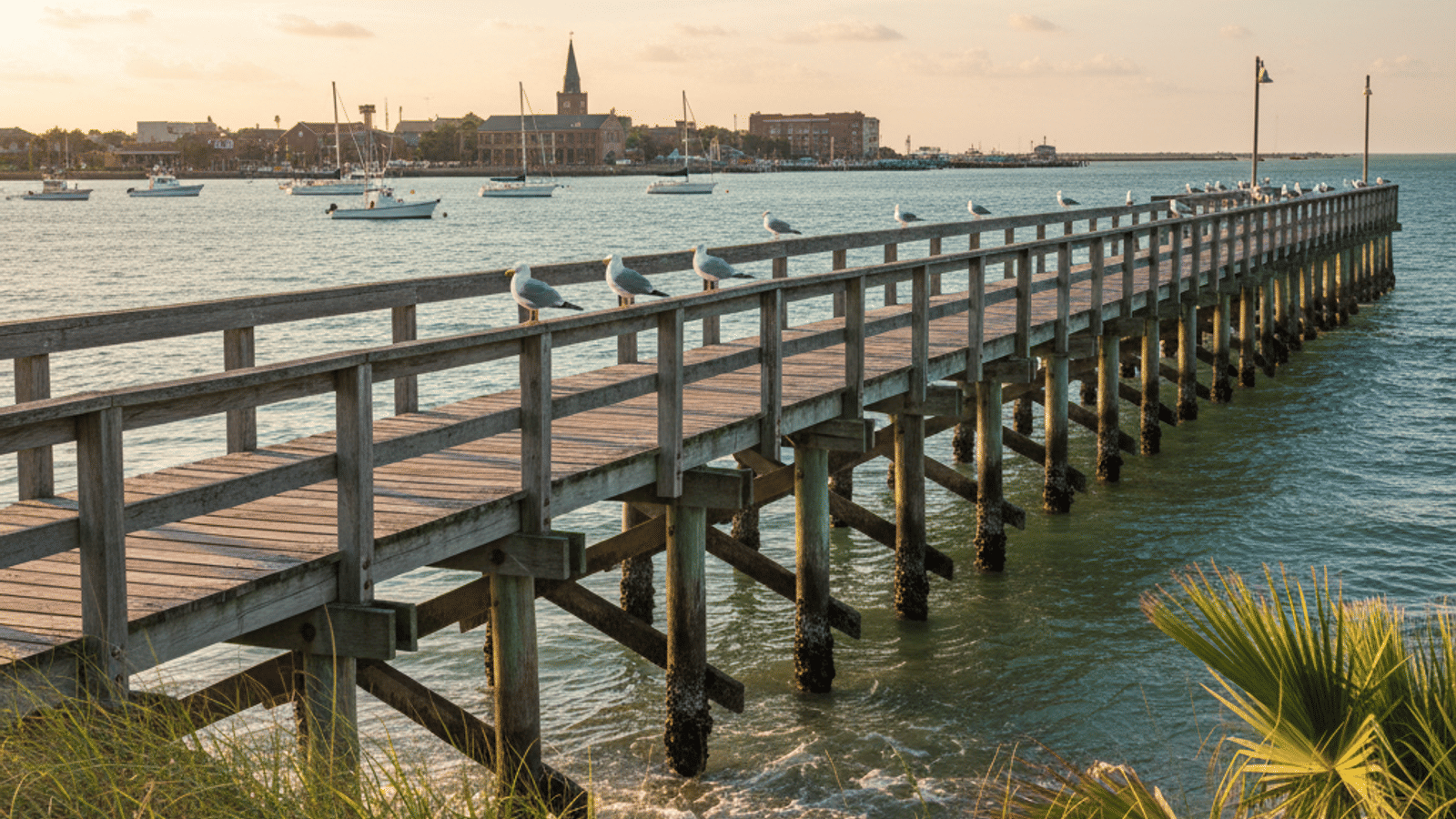
If you are looking to buy a home on the Texas Gulf Coast, you have likely narrowed your search to two major players: Galveston and Texas City. On a map, they sit right next to each other, separated only by a few miles of water and marsh. But if you spend a Saturday in each, you will realize the daily lifestyles are drastically different.
It really comes down to a choice between the "resort town" vibe and the "industrial hub" practicality. Galveston is a barrier island rich with history, tourism, and beach culture. Texas City sits firmly on the mainland bay shore, offering deep industrial roots and significant affordability.
For many of my clients, the decision splits down the middle: do you want the island lifestyle despite the higher costs and traffic, or do you want the budget-friendly convenience of the mainland with easier access to Houston? Let's break down the numbers and the nuance so you can decide which side of the causeway belongs in your future.
Cost of Living: Island Prices vs. Mainland Affordability
When we look at the financials, the "island premium" is a very real thing. Living on Galveston Island generally costs more across the board compared to living just across the bridge in Texas City.
Housing and Rent
The most immediate difference you will see is in home prices. Currently, the median home price in Galveston hovers around the $320,000 mark. You are paying for proximity to the Gulf, historical charm, and the prestige of an island zip code. Conversely, Texas City offers significantly more square footage for your dollar, with median prices closer to $200,000.
The rental market tells a similar story. If you are looking to lease, a standard apartment or small home in Texas City usually runs between $900 and $1,200 a month. To get something comparable in Galveston, especially if you want to be near the Seawall or downtown, you are looking at $1,100 to $1,400+ per month.
The Insurance Reality
I always tell buyers that the mortgage payment is only half the story on the coast. Insurance is where the gap between these two cities widens. Because Galveston is a barrier island, it is almost entirely classified as a Tier 1 windstorm zone by the Texas Windstorm Insurance Association (TWIA). This means flood and windstorm premiums are often significantly higher than on the mainland.
Texas City is also in a windstorm zone, so insurance isn't cheap compared to inland Texas, but it is generally more affordable than on the island. Additionally, property taxes vary by district. While both have standard rates, Texas City benefits from a massive industrial tax base (thanks to the refineries), which can sometimes help stabilize residential rates, though you should always check the specific tax rate for the subdivision you are eyeing.
Day-to-Day Expenses
Groceries and utilities tend to be roughly the same in both towns. However, maintenance costs are a hidden budget killer on the island. The salt air in Galveston is aggressive. HVAC units, cars, and exterior paint degrade much faster on the island than they do just ten miles inland in Texas City.
Lifestyle and Atmosphere: Tourism vs. Industry
This is usually the tie-breaker for buyers who can afford either location. You have to ask yourself: Do you want to live where other people vacation, or do you want a quiet, suburban base?
The Galveston Vibe
Galveston operates on "island time." The culture is defined by golf carts, weekend festivals like Mardi Gras and Dickens on the Strand, and a very walkable historic downtown. If you love having endless options for live music, local dive bars, and locally-owned seafood restaurants, this is the spot.
However, that comes with a trade-off: tourists. On summer weekends and during major events, traffic on the Seawall and Broadway is heavy. You share your grocery store and your favorite restaurants with thousands of visitors.
The Texas City Atmosphere
Texas City has a much more functional, suburban feel. It is dominated by the presence of the refineries and the port, which means the skyline is industrial rather than scenic. The weekends here are much quieter because it isn't a tourist destination.
The lifestyle in Texas City often revolves around practical amenities. You have the Tanger Outlets for shopping and the famous Texas City Dike for fishing and boating. Dining here leans more toward major chains and fast-casual spots rather than the eclectic local eateries you find on the island.
Job Market and Major Employers
Understanding the local economy helps explain the morning traffic patterns. The two cities are powered by very different industries.
Galveston is driven largely by education, healthcare, and tourism. UTMB Health (University of Texas Medical Branch) is the massive economic anchor; if you meet a local on the island, there is a high chance they work for UTMB. Beyond that, the economy relies heavily on maritime support, the Port of Galveston (cruise ships), and hospitality giants like Landry’s.
Texas City is the epicenter of heavy industry for the region. The economy is fueled by major players like Valero, Marathon, and Dow Chemical. If you work in plant operations, engineering, or petrochemical safety, Texas City puts you minutes away from the gate.
We also see a lot of "cross-commuting." Many people who work at the plants choose to live in Galveston for the lifestyle, while many UTMB support staff live in Texas City for the cheaper rent.
Commuting to Houston: The I-45 Factor
If your job requires you to commute to downtown Houston or you just want frequent access to the big city, Texas City has a distinct geographical advantage.
Galveston residents have to contend with the I-45 Causeway. It is the only way on or off the island. If there is an accident on the bridge, or if the weather gets bad, you can be stuck for a long time. Furthermore, on nice summer weekends, leaving the island on a Sunday afternoon means sitting in miles of beach traffic just to get to the bridge.
Living in Texas City cuts about 15 to 20 minutes off the drive to Houston, simply because you are already on the mainland. A typical drive from Texas City to downtown Houston might take 35 to 50 minutes, whereas that same drive from Galveston is often 50 to 70 minutes.
Schools, Safety, and Crime Rates
When looking at long-term livability, safety and education are top concerns. It is important to look at the data objectively rather than relying on reputation alone.
Safety Context
Both cities have crime rates that trend higher than the national average, but for different reasons. Galveston sees a higher volume of property crime, such as theft, which is common in high-traffic tourist areas. Texas City’s crime rates can be higher in pockets surrounding the industrial zones or older neighborhoods, while the newer subdivisions tend to be quieter.
Educational Options
Public school performance has been a mixed bag for both Galveston ISD and Texas City ISD. In recent years, ratings have fluctuated, and both districts face the challenges common in diverse, urbanizing areas.
Because of this, many residents in both towns explore alternatives. Galveston has cultivated strong magnet programs and charter options (like the O'Connell College Preparatory School) that many locals utilize to bypass standard zoning. If schools are a primary driver for you, you will want to look at specific campus ratings rather than judging the entire district as a whole.
Housing Market Comparison: Renting and Buying
Finally, let's look at the actual inventory. What kind of house can you actually buy?
Galveston's Inventory:
- Historic Homes: The East End is famous for Victorian architecture. These are beautiful but require significant upkeep.
- Raised Bungalows: You will see many homes on stilts or raised foundations to mitigate flood risk.
- Condos: There is a massive market for beachfront and bay-view condos.
- Short-Term Rentals: A lot of inventory here is snapped up by investors for Airbnbs, which can sometimes make finding a long-term rental difficult.
Texas City's Inventory:
- Traditional Ranches: The housing stock is dominated by single-story, brick ranch homes built from the 1950s to the 1980s.
- New Construction: There are several new subdivisions popping up on the west side of Texas City (towards I-45) offering modern amenities.
- Maintenance: Because these homes are generally brick and slab-on-grade (and slightly further from the salt spray), they are much easier and cheaper to maintain than island homes.
Frequently Asked Questions
Is it cheaper to live in Galveston or Texas City?
Texas City is generally cheaper. Between lower housing costs (median ~$200k vs ~$320k), lower average rent, and typically lower insurance premiums, your monthly overhead is significantly lower on the mainland than on the island.
Does Texas City have a beach?
Texas City has water access, but it does not have "beaches" in the traditional sense like Galveston. It features the Texas City Dike for fishing and boating, and some bayfront parks, but for sand and surf, residents usually drive over to Galveston.
How far is the commute from Galveston to Houston?
The drive from Galveston to downtown Houston typically takes between 50 and 70 minutes, depending heavily on traffic. Living in Texas City saves you about 15 to 20 minutes each way.
Is hurricane insurance required in Texas City?
While not always legally "required" if you don't have a mortgage, windstorm and flood insurance are highly recommended and usually required by lenders. Texas City is in a windstorm zone, though premiums are often slightly lower than the Tier 1 rates found on Galveston Island.
Which city is better for retirees?
It depends on the lifestyle you want. Galveston is popular for retirees who want an active, social lifestyle with walkable access to dining and history. Texas City is often chosen by retirees who want a quiet, budget-friendly home base with easy access to medical facilities and shopping.

April Aberle
REALTOR ® | Mortgage Originator | Homes for Heroes Affiliate | April Aberle | REMAX Crossroads Realty
or another way