Categories
Horse PropertiesPublished January 27, 2026
Is Galveston County a Good Place to Buy Horse Property in Texas?

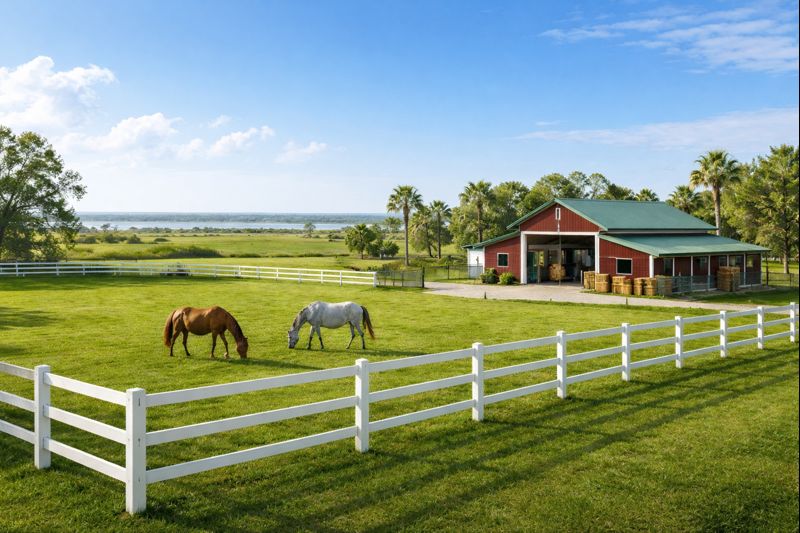
Is Galveston County a Good Place to Buy Horse Property in Texas?
Direct answer: Galveston County can be a good place to buy horse property if you pick land that actually functions for horses and you confirm restrictions early. The deciding factors are usually deed restrictions/HOA rules, flood and drainage realities, and whether the parcel supports safe access, fencing, and year-round usability.
Is Galveston County a good place to buy horse property?
- Yes — for the right buyer who wants a coastal-adjacent lifestyle with access to Houston-area services.
- No — if you need “set it and forget it” land and aren’t prepared to evaluate drainage, mud seasons, and maintenance.
- The property matters more than the county: one parcel can be perfect for horses while another (two miles away) is a constant water and access problem.
- Restrictions are the make-or-break: deed restrictions and HOAs can limit horses, barns, arenas, fencing types, or trailer storage.
- Usability beats acreage: a smaller, higher, drier parcel can outperform a larger one that stays saturated.
Expanded explanation
1) Start with restrictions (because they can kill the deal)
Before you get excited about the barn or the pasture, confirm you’re actually allowed to do what you intend to do. In real life, the biggest “surprise” issues for horse buyers are not the house — they’re the rules that come with the land.
What to request early (before you’re deep into the process):
- Deed restrictions / subdivision covenants
- HOA rules (if applicable)
- Any architectural guidelines that apply to outbuildings
- Survey and easements (to see what you can’t build on)
What you’re looking for: language about livestock, “nuisances,” outbuildings, minimum setbacks, fencing, trailer/RV storage, and whether riding arenas or commercial use is restricted. If the rules are vague, assume enforcement risk and get clarification in writing.
2) Water changes everything: flood risk, drainage, and day-to-day horse care
Horse property near the coast demands a higher standard of due diligence. Even if the home itself seems fine, the land may behave very differently after heavy rain. That impacts your ability to keep turnout safe, maintain footing, and even access the property with a trailer.
Practical “horse owner” questions to ask on every showing:
- Where does water sit after storms?
- Is there a high spot suitable for a barn pad and dry lot?
- Does the driveway stay passable year-round?
- Will your “pasture” become months of mud?
What good looks like: a clear high-and-dry area for infrastructure (barn, tack, feed storage), a turnout plan that avoids constant saturation, and a realistic pathway to improve drainage without fighting the property forever.
3) Land usability: pasture, fencing, and infrastructure (the stuff that makes ownership enjoyable)
Most buyers shop by acreage. Horse owners should shop by function. You want land that supports your routine without turning every week into a maintenance project.
Your basic usability checklist:
- Fencing: safe materials, good corners, and a layout that supports rotation (not just one big field).
- Water access: reliable trough locations and the ability to expand lines if needed.
- Trailer flow: gate width, turning radius, and an actual place to park/load without drama.
- Storage: feed and tack need dry, secure space (humidity and pests are real considerations).
- Footing plan: if you want an arena, you need a plan that accounts for drainage and base work.
If you want the “easy version” of horse ownership, prioritize parcels that already have proven infrastructure — even if the house is less perfect. You can remodel a kitchen. You can’t easily remodel land that never drains.
Misconceptions / key insights
- “If it’s acreage, it’s automatically horse property.” Not if the land can’t stay usable or restrictions prohibit livestock.
- “I’ll figure the rules out after I’m under contract.” That’s backwards. Get documents up front so you can make a clean decision.
- “A pretty pasture photo means it’s good pasture.” Photos hide drainage issues. Walk it, ask questions, and think in wet-season terms.
Important considerations before you write an offer
- Confirm restrictions first (deed restrictions + HOA if applicable).
- Evaluate flood/drainage early (don’t wait until late in the contract timeline).
- Check septic and utilities (capacity, age, and whether expansion is feasible).
- Think like a trailer: can you get in/out easily every time, not just on a sunny day?
- Budget for land work: fencing repairs, drainage improvements, and footing can add up fast.
FAQ
Is Galveston County a good place to buy horse property?
It can be — if you choose a parcel that supports horses in real life (restrictions, drainage, access, and usable turnout). The best properties are the ones that stay functional after heavy rain, not just the ones that look good on listing day.
What’s the biggest mistake horse buyers make?
Buying based on acreage and aesthetics, then discovering the land stays wet, access is difficult, or restrictions limit what you can do. Confirm documents early and evaluate the land like you’ll own it through the worst weather weeks.
What should I verify before buying?
Deed restrictions/HOA rules, flood and drainage conditions, septic/utility details, trailer access, fencing feasibility, and where you’ll place dry infrastructure (barn, feed, tack, and turnout).
Next Steps
If you’d like help evaluating a specific horse property in Galveston County (land usability, restrictions, and practical setup), you can schedule time here:
https://tidycal.com/aprilaberlerealtor
April Aberle
REALTOR ® | Mortgage Originator | Homes for Heroes Affiliate | April Aberle | REMAX Crossroads Realty
or another way