
Categories
Horse PropertiesPublished March 17, 2026
What Horse Owners Should Know Before Moving to the Texas Gulf Coast

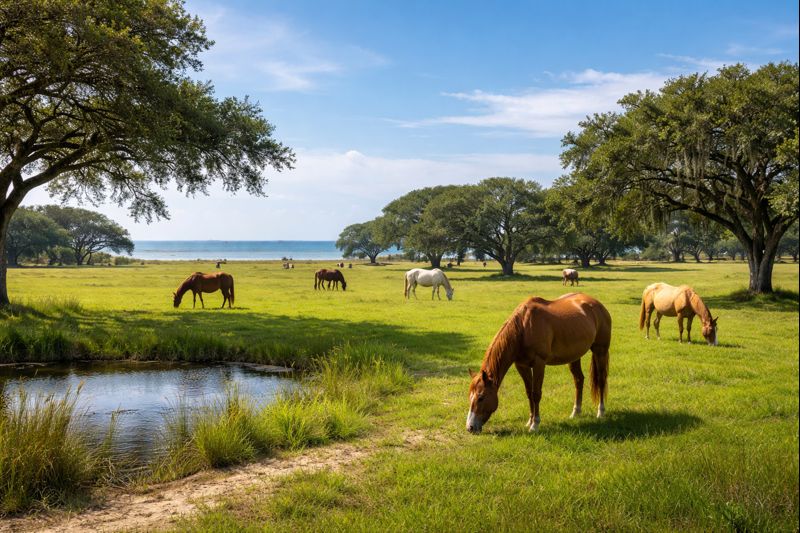
What Can Horse Owners Expect When Moving to the Gulf Coast?
Horse owners relocating to the Texas Gulf Coast can expect a warmer, more humid climate, different land and pasture conditions, floodplain considerations, and zoning rules that vary by county. In areas like Galveston County and Brazoria County, horse ownership is absolutely possible—but success depends on preparation, property selection, and understanding coastal realities.
What Can Horse Owners Expect When Moving to the Gulf Coast?
- Hot, humid weather that changes feeding and care routines
- Flat terrain with drainage and flood zone considerations
- Zoning rules that vary widely by municipality and acreage
- Pasture grass and soil conditions different from inland regions
- A strong but spread-out equestrian community
Climate, Heat, and Daily Horse Care
The biggest adjustment for most horse owners moving to the Gulf Coast is the climate. Summers are long, hot, and humid, with temperatures frequently climbing into the 90s and heat indexes even higher.
This affects daily routines. Many owners shift riding to early mornings or evenings, increase electrolyte supplementation, and focus heavily on hydration. Shade structures, proper ventilation in barns, and access to fresh water become non-negotiable rather than optional upgrades.
Winter, however, is mild. Freezes are rare and short-lived, which reduces concerns about frozen water lines or extreme cold management. This allows for year-round riding and training with fewer seasonal disruptions.
Land, Floodplains, and Property Selection
Land looks plentiful along the Gulf Coast, but not all acreage is equal for horses. Much of Galveston and Brazoria County sits at low elevation, making drainage and flood zones a critical part of any property evaluation.
Floodplain designation does not automatically disqualify a property, but it does affect:
- Barn placement and elevation
- Pasture usability after heavy rains
- Insurance requirements
- Long-term maintenance costs
Successful horse properties in this region are typically elevated slightly, designed with intentional drainage, and use fencing and barn materials that tolerate moisture well.
Zoning, Acreage, and Horse-Friendly Rules
Unlike some rural states with blanket agricultural allowances, zoning rules on the Texas Gulf Coast vary by city, subdivision, and county. One property may allow multiple horses per acre, while another—just a few miles away—may restrict livestock entirely.
This makes due diligence essential. Before purchasing, horse owners should verify:
- Livestock allowances per acre
- Setback requirements for barns and fencing
- HOA restrictions, if applicable
- Access for trailers and large equipment
Many of the most horse-friendly properties are located just outside city limits, where county regulations provide greater flexibility.
Pasture, Soil, and Feed Differences
Coastal Texas soil tends to be clay-heavy, which drains differently than sandy or loamy inland soils. This impacts pasture management, especially after heavy rain.
Common adjustments include reinforced high-traffic areas, rotational grazing, and grass selections that tolerate moisture and heat. Some owners rely more heavily on dry lots to protect pasture health.
Hay types and availability may also differ from what you’re used to, so connecting with local feed suppliers early helps avoid surprises.
Equestrian Community and Lifestyle
While the equestrian community along the Gulf Coast is more spread out than in some inland horse hubs, it is active and diverse. You’ll find boarding facilities, trainers, farriers, and veterinarians—but planning ahead matters, especially in more rural pockets.
The lifestyle trade-off is space, privacy, and proximity to the coast. Many horse owners enjoy the balance of rural acreage with access to beaches, fishing, and coastal amenities.
FAQ
Can horses live comfortably in Gulf Coast heat?
Yes, with proper shade, hydration, and adjusted riding schedules, horses adapt well to the climate.
Is flood insurance required for horse properties?
If structures fall within designated flood zones, insurance may be required or strongly recommended.
Are horse properties common in Galveston and Brazoria counties?
Yes, especially outside city limits, though zoning rules vary and must be confirmed property by property.
Next Steps
If you’re considering a move to the Texas Gulf Coast with horses, understanding land use, zoning, and property layout before you buy can save significant time and expense.
Schedule a consultation to discuss horse-friendly properties in Galveston and Brazoria counties.
April Aberle
REALTOR ® | Mortgage Originator | Homes for Heroes Affiliate | April Aberle | REMAX Crossroads Realty
or another way