
Categories
Texas CityPublished November 9, 2026
The History of Texas City, TX: Founding, the 1947 Disaster, and the City Today

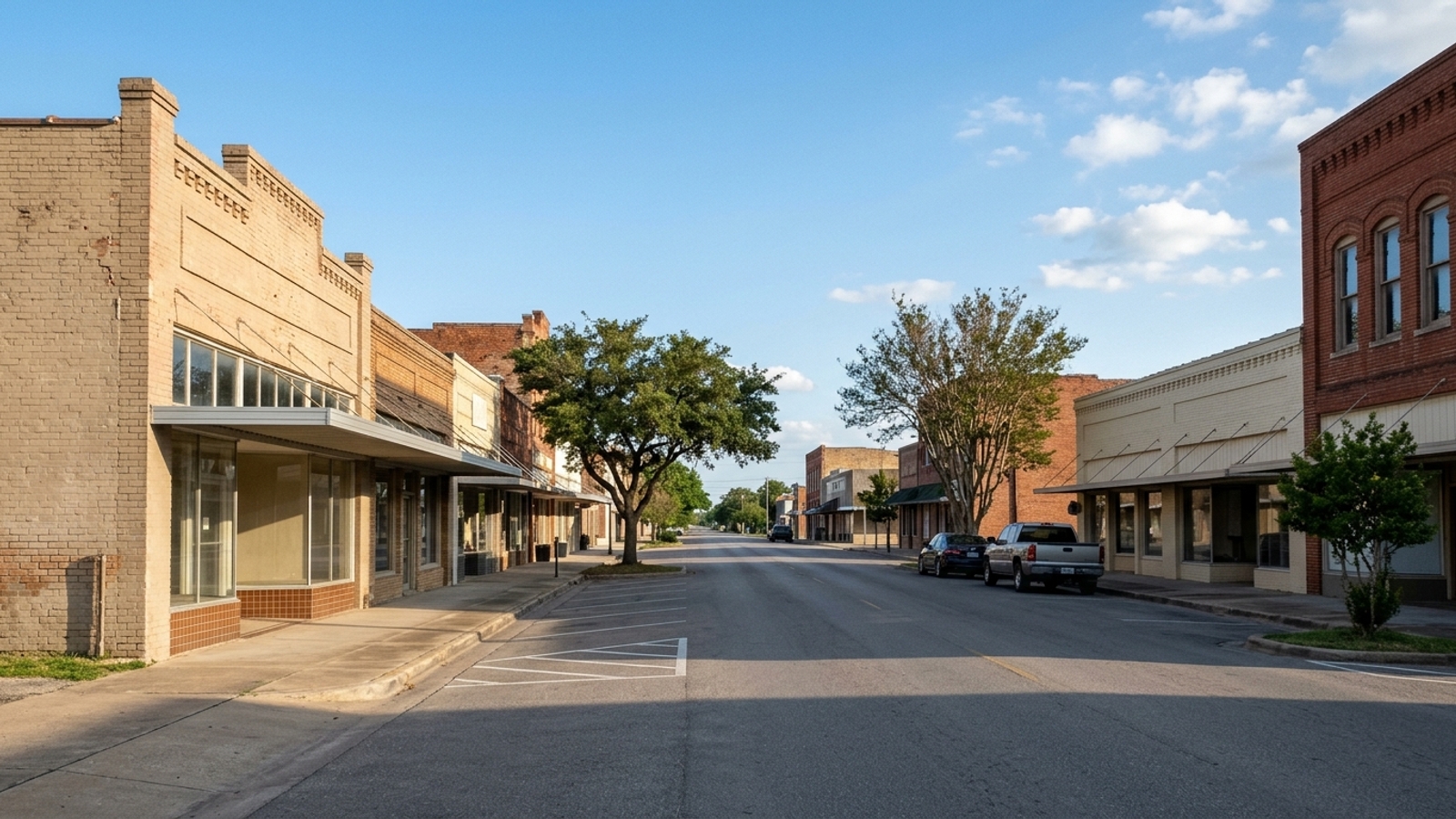
Texas City sits on the mainland of Galveston Bay, carrying a legacy defined by industry, disaster, and resilience. Its deepwater port and massive refinery complexes are the economic engines that put it on the map in the 1890s.
That port-first origin still shapes the city's current layout, from the hurricane levee to the older homes near the waterfront. Today's housing market gives buyers a chance to weigh these factors, with single-family home prices remaining relatively flat over the past year.
Key takeaway
Texas City began in the 1890s as a deepwater port venture funded by Minnesota investors. It is best known for the April 16, 1947 ship explosion that leveled its waterfront, prompting a series of rebuilds that left a hurricane levee and a working refinery edge that still shape where people live. If you are weighing a home here, read the history as a checklist to confirm an address's flood zone and levee side first, then compare prices, with the single-family median at roughly $296,882 over the 90 days ending September 30, 2026.
Who this guide is for
You are considering buying or living in Texas City and want to understand how its port, industrial, and storm history shaped the city before you narrow down where to look.
An overview of the city's history
Texas City's history is essentially a series of rebuilds: the 1947 Grandcamp explosion, the 2005 refinery blast, and Hurricane Ike. Each one left something a buyer still deals with today, including the hurricane levee, the working industrial edge, and the older housing stock near the original port. The city started as an 1890s port venture before becoming the industrial center it is now.
With single-family prices up just 0.2% year over year and 5.4 months of supply across all homes during the 90 days ending September 30, 2026, today's buyer has time to check those historical layers on any address before making an offer.
The founding of Texas City
In 1891, three brothers from Duluth, Minnesota, visited a marshland community on Galveston Bay known as Shoal Point. Jacob R., Henry, and Benjamin F. Myers recognized the area's potential as a major port and joined other Duluth shippers to buy 10,000 acres of bay frontage. They renamed the area Texas City, and the Texas City Improvement Company filed the first townsite plat on May 17, 1893.
A port was the entire point of the settlement, and that original purpose still dictates the city's layout today, with heavy industry dominating the waterfront and the town grid spreading inland. The community grew steadily around these shipping operations. In 1911, an election was held to incorporate the town, and W.P. Tarpey was elected as the first mayor, officially establishing the city of Texas City.
Port and refinery growth in the 20th century
As the 20th century progressed, Texas City shifted from a simple shipping hub into a massive industrial center. Early refineries and tank farms took root along the water, drawing thousands of workers to the area. The 1940s brought a wartime boom to the local economy, cementing the city's place in global manufacturing.
One major addition during this era was the Longhorn Tin Smelter, which opened on April 5, 1942, after the Texas City Terminal Railway Company donated a 100-acre plot. Built at a cost of $3.5 million, the facility refined 44 percent of the world's supply of tin before the end of World War II. The industrial waterfront is not incidental to Texas City; it is the economic base, and the exact reason the east side looks the way it does today.
The 1947 Texas City disaster
One of the worst disasters in Texas history occurred on the morning of April 16, 1947, when the SS Grandcamp exploded at 9:12 a.m. at the docks. The ship was loaded with ammonium nitrate, and the initial blast triggered a chain reaction of fires and secondary explosions across the waterfront. The disaster wiped out most of the city's volunteer fire department, who had responded to the initial fire aboard the ship.
The exact number of people killed will probably never be known. The ship's anchor monument records 576 known dead, 398 of whom were identified, along with 178 people listed as missing. It remains widely cited as the deadliest industrial accident in U.S. history.
The tragedy also led to a landmark legal battle over government liability. The resulting Supreme Court case, Dalehite v. United States, was argued and decided in 1953. The Court ultimately held that the government's actions regarding the fertilizer production fell within the discretionary function exemption to the Federal Tort Claims Act.
Rebuilding after 1947 and later storms
Following the 1947 explosion, the city cleared the debris and rebuilt its port and industrial facilities. The area also faced ongoing threats from coastal weather, prompting the authorization of the Texas City Hurricane Flood Protection Project in 1958. Construction on the levee system began in 1962 and was completed in April 1987, creating a barrier that protects about 36 square miles of the greater Texas City, La Marque, and Hitchcock area.
Serious challenges kept coming. The March 23, 2005 explosions and fires at the BP America Texas City Refinery resulted in 15 deaths and 180 injuries. Later storms like Hurricane Ike tested the region's infrastructure further. Today, the 22 miles of levees and floodwalls are the reason much of the city's flood picture differs from unprotected coastal areas.
Because protection varies by address, buyers should always confirm the flood zone and levee side for a specific property. You can read more about how this impacts specific neighborhoods in the weather and flood guide.
Where to see local history today
If you want to see the 1947 story in person on a scouting trip, start with the Texas City Museum and then visit the disaster memorial site. The museum is located at 409 6th Street N and features exhibits on the city's founding, the First Aero Squadron, and films and artifacts from the 1947 disaster. Confirm the museum's current hours and admission on its official site before visiting.
Nearby, the city transformed the small cemetery where unidentified victims of the 1947 explosion were buried into Memorial Park. The park hosts commemorative ceremonies today and features the recovered anchor from the SS Grandcamp, which was blown from the ship and buried near the railway terminal during the blast. You can also visit the Texas City Dike, a massive structure extending into the bay that serves as both a living landmark and a recreation spot.
For everything beyond history, check out the things to do guide.
What this history means for buying a home today
If you are weighing a home purchase here, a few questions are worth sitting with before you start touring:
- Do you mostly want the story itself, or are you sizing up a move? For the story, read the founding, port, and 1947 sections in order; for a move, spend your time reviewing how the city rebuilt and what that means for buyers today.
- Is flood exposure your first concern? Understand why the levee exists, then review the weather and flood guide before touring any home.
- Would living close to the port or refineries bother you? Check the distance to the nearest industrial fenceline, and compare newer areas through the neighborhood and new-development guides.
This market gives you room to think. Single-family homes currently take a median 58 days to sell and close at 97.4% of list price. Because only 15.5% of these homes sell above list, you rarely need to waive inspections to compete.
The flood layer is your first priority. Look up each address's FEMA flood zone and confirm whether it sits inside the hurricane levee system. Get a flood insurance quote for the specific property during your option period, not after closing. Ask the seller whether the home has flooded or had an insurance claim since Hurricane Ike.
Homes near the original core tend to be older, so ask the seller for the build year and order a full inspection including the foundation and roof. April Aberle can pull flood-zone and sales history for a shortlist of addresses to help you compare your options. It also helps to weigh the pros and cons of living in Texas City before choosing a neighborhood.
You can also read the housing market guide and the breakdown of the best neighborhoods to narrow your search. If you are comparing commute times, check the commute times guide for routes to Houston and Galveston.
At a glance
- Median sale price, single family: $296,882 (90 days ending 2026-09-30, 210 sales)
- Median sale price, all homes: $289,785 (90 days ending 2026-09-30, 217 sales)
- Year-over-year price change: +0.2% single family; -2.6% all homes (90 days ending 2026-09-30)
- Median days on market: 58 single family; 62 all homes (90 days ending 2026-09-30)
- Sale-to-list ratio: 97.4% single family; 97.3% all homes (90 days ending 2026-09-30)
- Share sold above list price: 15.5% single family; 15% all homes (90 days ending 2026-09-30)
- Months of supply: 5.3 single family; 5.4 all homes (90 days ending 2026-09-30)
- Homes for sale (inventory): 367 single family; 383 all homes (90 days ending 2026-09-30)
- Median price per square foot: $149 single family; $148 all homes (90 days ending 2026-09-30)
Texas City history FAQs
What is Texas City, Texas famous for?
Texas City is best known for its massive port and refinery economy, as well as the devastating 1947 ship explosion that leveled its waterfront. The city is also known for the Texas City Dike, a 28,200-foot-long structure that is a major fishing and recreation landmark. You can read more about the 1947 disaster in the dedicated section above.
What movie was filmed in Texas City?
There is no verified data on specific major motion pictures filmed in the city. If you are looking for local production history, check the Texas Film Commission database for confirmed titles.
How did Texas City get its name?
The area was originally known as Shoal Point until 1891, when three brothers from Duluth, Minnesota, recognized its potential as a major port. Jacob R., Henry, and Benjamin F. Myers, along with other Duluth shippers, bought 10,000 acres of Galveston Bay frontage and renamed the settlement Texas City. The Texas City Improvement Company filed the first townsite plat shortly after on May 17, 1893.
What county is Texas City, TX in?
Texas City is located in Galveston County. It sits on the mainland along the shores of Galveston Bay, which makes it distinct from the communities located south on Galveston Island.
When was the Texas City Dike built?
The first timber pile version of the dike was completed in 1915 at a cost of $1.4 million, following authorization by the River and Harbor Act of 1913. The Army Corps added a rubble-mound formation in 1931 and 1932 to complete the structure. Today, the dike consists of a 28,200-foot-long pile and rubble-mound system extending into the bay.
Is Texas City its own city or part of Galveston?
Texas City is a separately incorporated city in Galveston County, completely distinct from the City of Galveston. It was officially incorporated in 1911 when W.P. Tarpey was elected as its first mayor. As of the July 1, 2025 estimate, the city has a population of 59,733 residents.
Is Texas City one of the oldest cities in Texas?
No. Texas City is a relatively young industrial port town founded in the 1890s. By comparison, the oldest settlements in the state date back much further, including Ysleta in 1680, San Antonio in 1718, and Nacogdoches in 1779.
How far is Texas City from Houston and Galveston?
Texas City is located about 14 miles north of Galveston and roughly 40 miles south of downtown Houston. If you plan to make that drive regularly, check the commute times guide for route details and typical traffic patterns.
Sources
- Redfin: Data Center
- TSHA: Texas City, TX
- City of Texas City: Incorporation
- City of Texas City: Tin Smelter
- TSHA: Texas City Disaster
- Library of Congress: Dalehite v. United States
- City of La Marque: Flood Protection Levee
- U.S. Chemical Safety Board: BP Texas City Report
- City of Texas City: Museum
- City of Texas City: Recovery
- City of Texas City: Texas City Dike
- U.S. Census Bureau: QuickFacts
- TSHA: Ysleta, TX
- City of Texas City: The Town

April Aberle
REALTOR ® | Mortgage Originator | Homes for Heroes Affiliate | April Aberle | REMAX Crossroads Realty
or another way