
Categories
Gulf Coast Real EstatePublished February 4, 2026
What Should You Know Before Buying a Beachfront Home in Galveston County?

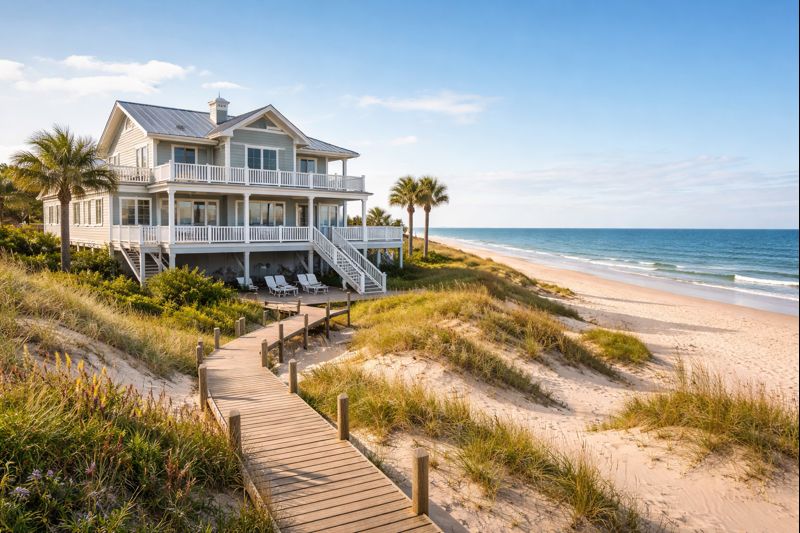
Market: Gulf Coast (Galveston County)
When you purchase a beachfront home in Galveston County, you’re not just buying the view—you’re buying the risk profile, the insurance reality, and the long-term maintenance plan. The smartest move is to verify flood/wind exposure, get real insurance quotes early, inspect for salt-air and storm-related wear, and confirm any short-term rental restrictions before you commit.
What should you know when purchasing a beachfront home?
- Insurance and flood risk can make or break affordability—get quotes before you fall in love with the house.
- Salt air accelerates wear on metal, HVAC, fasteners, and exterior finishes—plan for higher maintenance.
- Inspections should be coastal-specific, not just a standard home inspection checklist.
- Vacation rental eligibility is property-specific—HOA/POA/condo rules can override your plans.
- Storm readiness and resilience features (roof, windows, elevation, drainage) matter for both safety and resale.
- Exit strategy matters—a beachfront home can be a great investment when the numbers and rules actually pencil out.
The beachfront home “due diligence stack” that protects you
1) Start with the unsexy part: flood, wind, and insurability
Beachfront purchases go sideways most often at the same place: the true monthly cost. In coastal markets, the mortgage payment is only one piece. Flood and wind exposure (and the insurance tied to that exposure) can shift your all-in cost dramatically.
Your practical move is simple: get insurance quotes early and treat them like a non-negotiable part of your affordability calculation. Don’t wait until you’re under contract and the clock is ticking. If you’re buying as a vacation rental investor, also confirm whether your intended use changes coverage needs and pricing.
Also: beachfront homes often have “edge case” issues—older roofs, older windows, outdated tie-downs, or limited mitigation features—that can impact premium eligibility. The earlier you uncover those items, the more leverage you have to negotiate repairs, credits, or a realistic purchase price.
2) Coastal wear is real: plan for maintenance like an investor, not a tourist
Salt air is relentless. It doesn’t care if the home looks immaculate today. Over time, it accelerates corrosion on hardware, exterior fixtures, railings, door components, and even HVAC coils. The result is not “a little more upkeep”—it’s a different ownership model.
If you’re buying as an investor (especially a vacation rental investor), you want a maintenance plan that protects your uptime and your reviews. That typically means:
- Budgeting for more frequent exterior maintenance (paint, caulk, trim, sealants)
- Planning HVAC servicing and replacement cycles more aggressively
- Choosing materials that hold up to coastal conditions (where feasible)
- Keeping reserves for storm-prep and post-storm remediation
The goal isn’t to be scared off. The goal is to buy with your eyes open, with a budget that matches reality.
3) Upgrade your inspection approach: standard + coastal-specific checks
A standard inspection is necessary, but it’s not always sufficient for a beachfront home. The key is to focus on the systems and components that coastal conditions stress the most.
Consider asking for (or adding) these inspection angles:
- Roof + attic evaluation (age, fasteners, wind resistance indicators, moisture intrusion)
- Window/door integrity (seals, wind resistance, water intrusion points)
- Moisture and mold assessment (especially if the home has been vacant seasonally)
- Structural/foundation review (movement, piers, pilings, drainage impacts)
- HVAC performance + corrosion inspection
- Decks/balconies/railings (corrosion, rot, load safety)
If you’re an investor, also evaluate the home through an operations lens: where will you store owner supplies, how will you handle sand management, what’s the turnover path, and how will you prevent humidity-related issues between guests?
4) Vacation rentals: assume nothing until you verify the exact rules
If your plan includes short-term rentals, this is the section that saves you from expensive surprises. Vacation rental eligibility is often determined by layers of rules: HOA/POA restrictions, deed restrictions, condo bylaws, and local permitting requirements.
The simple rule: verify before you buy. Don’t rely on “the neighbor does it” or “I saw listings nearby.” Confirm the property’s governing documents (and any required permits) so your investment model is based on facts, not assumptions.
If you’re running numbers, be conservative. Build scenarios for: best case (you can rent as planned), restricted case (minimum stay requirements or occupancy limits), and no-rental case (the property must be personal use only). If the deal only works in the best case, it’s not a deal—it’s a gamble.
“April was very patient and helpful throughout the process. I could text her whenever and she was willing to do in-person or virtual viewings. She was extremely responsive and saved me money during negotiations, which helped significantly with my loan terms.” —Client
Misconceptions that cost beachfront buyers the most
- “If it’s on a rental site, it must be allowed.” Listing platforms don’t validate your legal right to operate.
- “I’ll figure out insurance later.” Insurance can change your payment so much that the deal stops working.
- “A pretty remodel means it’s low-maintenance.” Coastal conditions punish shortcuts over time.
- “Beachfront always appreciates.” Desirability is real, but marketability depends on condition, resilience features, and carrying costs.
Important considerations before you commit
Before you write an offer, you want a checklist that protects both lifestyle buyers and investors:
- All-in monthly cost: mortgage + taxes + insurance + HOA + utilities + maintenance reserves
- Resilience features: roof age, window protection, drainage, elevation-related concerns
- Operational readiness (investors): cleaning/turnover logistics, owner storage, humidity control, smart locks
- Restrictions: HOA/POA/condo docs, deed restrictions, rental minimums, pet/parking limits
- Exit plan: Who will buy this from you later—primary resident, second-home buyer, or investor—and what will they care about?
A beachfront home can be an amazing lifestyle purchase and a strong investment—when you buy the right property with the right expectations and verified rules.
“April helped us find the perfect beach house as we moved from the West Coast back to Texas. She was available almost 24/7 and always responded quickly. When the seller didn’t leave promised furniture, she went out of her way to help us find a replacement. We highly recommend working with April.” —Client
FAQ
Do I need flood insurance to buy a beachfront home in Galveston County?
Many lenders require flood insurance if the home is in a designated flood zone, and even when it’s not required, coastal buyers often choose it due to storm and surge exposure. Confirm requirements with your lender and get quotes early so your payment estimate is real.
What inspections matter most for a beachfront home?
Start with a strong general inspection, then add coastal-specific emphasis: roof/wind resistance indicators, moisture intrusion, mold risk, corrosion-prone systems (HVAC), and structural/drainage concerns. Beachfront homes fail in predictable places—inspect those places thoroughly.
Can I use a beachfront home as a vacation rental?
Sometimes yes, but it depends on the property’s restrictions (HOA/POA/condo rules, deed restrictions) and any local permitting requirements. Verify the exact rules for the exact property before you buy—your investment plan should be built on documented facts.
What are common hidden ownership costs for beachfront homes?
Insurance (flood/wind), accelerated exterior maintenance, HVAC corrosion, higher utilities, storm-prep supplies, and larger repair reserves can meaningfully change your annual cost. Budget like an investor even if you’re buying for lifestyle.
Next Steps
If you’re considering a beachfront home in Galveston County—especially as a vacation rental investment—get your numbers and rules verified before you commit. If you’d like help evaluating a specific property, call 409-919-0575.

April Aberle
REALTOR ® | Mortgage Originator | Homes for Heroes Affiliate | April Aberle | REMAX Crossroads Realty
or another way