
Categories
Buying a homePublished March 11, 2026
Average Cost of a Home in Galveston, TX: A 2026 Buyer’s Guide

The Real Cost of Island Living: Beyond the Listing Price
If you have been browsing homes for sale in Galveston, you might be pleasantly surprised by what you see. As of early 2026, the median home price on the island is hovering around $350,000. Compared to other coastal markets across the US, that looks like an incredible bargain. However, any local agent will tell you that the "sticker price" is only half the story when you cross the causeway.
The reality of buying here is different than buying on the mainland. While the listing prices are attractive, the monthly carrying costs—specifically insurance and taxes—can catch new buyers off guard. We are currently seeing a shift in the market for the 2025-2026 season where inventory is rising, creating a genuine buyer's market. In fact, prices in the luxury sectors, particularly on the West End, have cooled by about 13% compared to previous highs.
This means you can absolutely afford to live here, but you have to budget differently. The mortgage principal and interest are just the beginning. To truly understand if a property fits your budget, we need to look at the total monthly cost of ownership, including the unique insurance requirements that come with life on the Gulf Coast.
2026 Price Breakdown by Neighborhood & Property Type
Galveston isn't just one big market; it is a collection of very different neighborhoods, each with its own price point and vibe. A beachfront mansion skews the averages, so it helps to break it down by where you actually want to live.
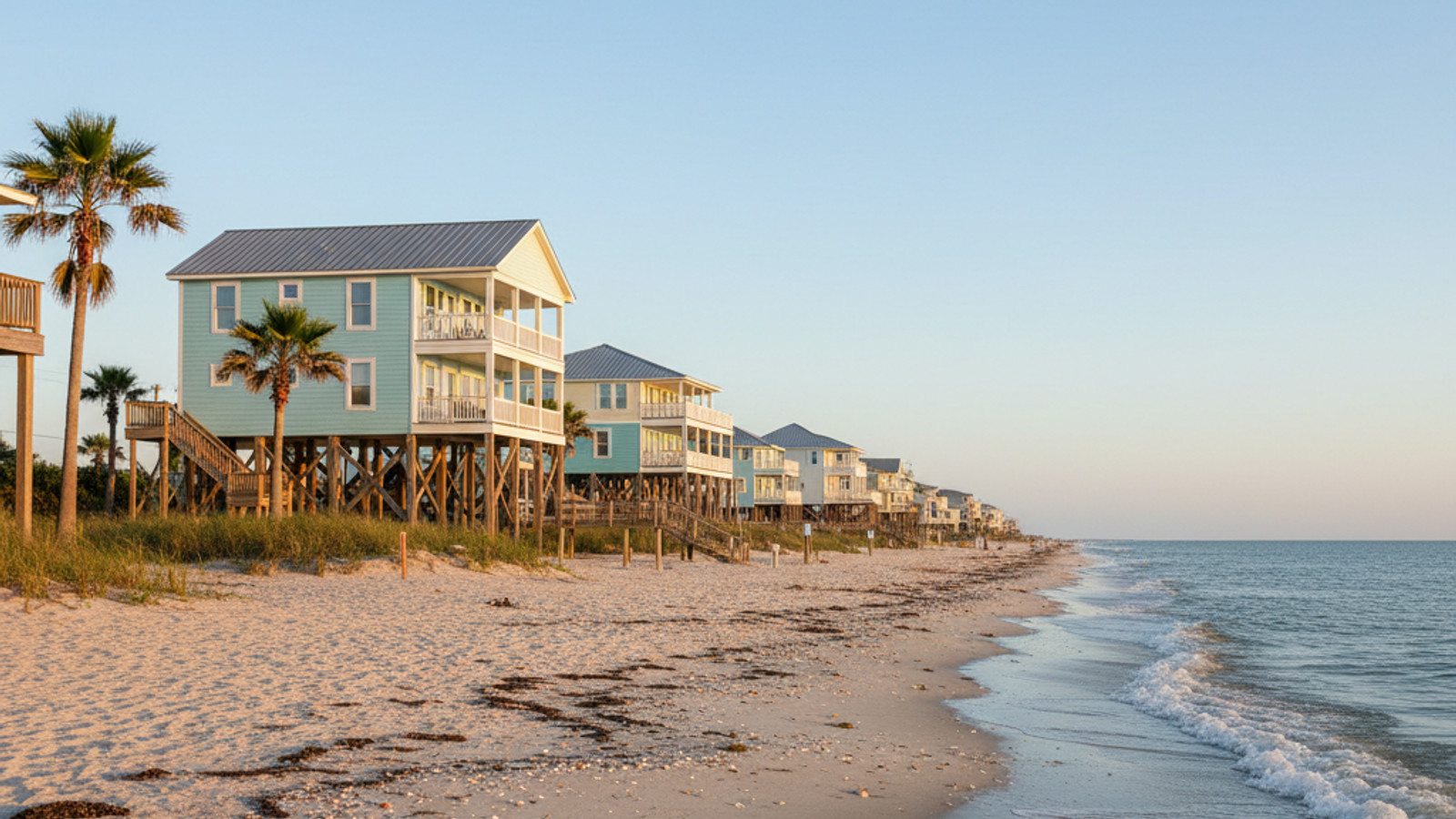
The West End (Vacation & Luxury) If you are looking for those iconic stilt houses with Gulf views, you are looking at the West End. This area is popular for vacation rentals and second homes. While it has historically been the most expensive part of the island, the market has softened recently. The median price here is currently sitting around $560,000. If you are an investor, this price drop represents a window of opportunity that wasn't there two years ago.
The East End (Historic & Urban) This is the heart of the island's charm. The East End Historic District offers Victorian architecture and high walkability to The Strand and local restaurants. Prices here are generally more stable and moderate than the beachside, with a median close to the island average of $350,000. It attracts people who want a community feel rather than just a beach house.
Midtown & Central City For those looking for the best affordability, Midtown is the core. You will find smaller bungalows and traditional ranch-style homes here. It is often the entry point for primary residents working at UTMB or in the maritime industry, offering lower entry prices and often slightly lower flood risks due to the protection of the Seawall.
Condos (Seawall & Beachfront) Condos offer the lowest entry price, often ranging between $200,000 and $300,000. However, the trade-off is the monthly HOA fee. While the mortgage is low, the maintenance fees can be significant, so you have to weigh the convenience of "lock-and-leave" against those fixed monthly costs.
The 'Hidden' Costs: Insurance & Taxes
This is the most critical part of your budget planning. If you are moving from Houston or out of state, you might assume your standard homeowner's policy covers everything. On the island, that is rarely the case. We usually deal with a "three-legged stool" of costs: Taxes, Windstorm, and Flood.
Windstorm Insurance (TWIA) Most traditional hazard insurance policies exclude wind and hail coverage in coastal counties. You will likely need a separate policy through the Texas Windstorm Insurance Association (TWIA). For an average home, you should budget between $2,500 and $3,500 per year just for this policy.
Flood Insurance Flood insurance is a separate policy again. Costs vary wildly depending on your flood zone (VE, AE, or X). VE zones (velocity zones near the beach) are the most expensive, while X zones are considered lower risk. Even if you are in an X zone, flood coverage is highly recommended because rising water doesn't always obey map lines. Expect to pay anywhere from $800 to $1,500 per year, though this can go higher for older homes below base flood elevation.
Property Taxes Since Texas has no state income tax, we rely heavily on property taxes. In Galveston, the total tax rate usually lands between 2.2% and 2.6% of the assessed value, depending on your specific utility district.
HOA Fees If you are buying a condo or a home in a specific West End subdivision, check the HOA documents carefully. For condos, fees often average $450 to $800 per month. It sounds high, but remember that this usually covers the building's windstorm and flood insurance, which takes some burden off your individual policies.
Case Study: The Total Monthly Cost of Ownership
Let's ground this in reality with a math example. Let's say you are looking at a nice 3-bedroom home, perhaps a bay-side house on the West End or a renovated historic home in the East End, listed for $400,000.
If you put 20% down, your loan amount is $320,000. Here is what your actual monthly check might look like:
- Mortgage (Principal & Interest): Calculated at current 2026 rates.
- Property Taxes: ~$860 per month (based on a 2.6% rate).
- Insurance Bundle: ~$400 per month (estimating roughly $4,800/year for Hazard + Wind + Flood combined).
- Total Estimated Payment: You are likely looking at a monthly payment that is $1,200+ higher than the mortgage payment alone.
When you are using a mortgage calculator, make sure you manually input these local tax and insurance estimates. If you use the default national settings, you will underestimate your payment by hundreds of dollars.
Investment Potential: Short-Term Rentals (STR)
A large portion of buyers in Galveston are investors looking to tap into the short-term rental market. Galveston remains one of the top drive-to vacation destinations in the South. While the market has cooled slightly, demand is still strong, particularly from May through August.
However, be aware that regulations are tightening. You must register for Hotel Occupancy Tax (HOT) and keep up with city permits. The West End is generally the most STR-friendly area, with rents averaging a long-term equivalent of $3,000 per month, though STR income fluctuates heavily with the seasons. It is still a viable investment strategy, but in 2026, it requires more hands-on management or a good property manager to ensure profitability.
Galveston vs. Houston Suburbs: Is it Worth it?
Finally, many relocators find themselves deciding between living in Galveston or settling in mainland suburbs like League City or Friendswood.
The mainland offers newer schools, larger lots, and significantly lower insurance rates. You get more "house" for your money in terms of square footage. However, you also get a 45-minute commute if you work on the island or want to visit the beach, and you miss out on the walkable, golf-cart lifestyle that defines island living.
Living in Galveston is about the lifestyle. You are paying a premium on insurance and taxes for the privilege of waking up near the ocean, walking to dinner, and enjoying a tight-knit community. For many of us, that trade-off is absolutely worth it.
Frequently Asked Questions
Why is insurance so expensive in Galveston?
Insurance is higher here because of the risk associated with hurricanes and tropical storms. Because standard insurers often exclude wind damage in coastal areas, homeowners must purchase separate Windstorm policies (usually TWIA) and Flood policies (FEMA/NFIP) on top of their standard hazard insurance, effectively tripling the number of policies needed.
Is Galveston a good place to invest in real estate in 2026?
Yes, largely because the market has shifted in favor of buyers. With inventory rising and West End prices cooling by roughly 13%, investors can negotiate better deals now than they could a few years ago. However, you must carefully calculate your carry costs to ensure the numbers work.
What is the average electric bill in Galveston?
Electric bills can be higher here than on the mainland, largely due to the age of the homes. Many historic Victorian homes lack modern insulation, and the high humidity requires air conditioners to work harder. It is smart to budget slightly higher for utilities, especially during the peak heat of August and September.
Do I need flood insurance if I'm not in a flood zone?
Yes, absolutely. Being in an "X zone" (low risk) means flood insurance is not federally required for a mortgage, but it does not mean you are safe from flooding. Approximately 20% of flood claims come from low-risk zones, and since X-zone policies are significantly cheaper (often under $800/year), it is a vital layer of protection for your asset.

April Aberle
REALTOR ® | Mortgage Originator | Homes for Heroes Affiliate | April Aberle | REMAX Crossroads Realty
or another way