
Categories
GalvestonPublished September 30, 2026
Real Estate and Daily Life in Downtown Galveston, TX

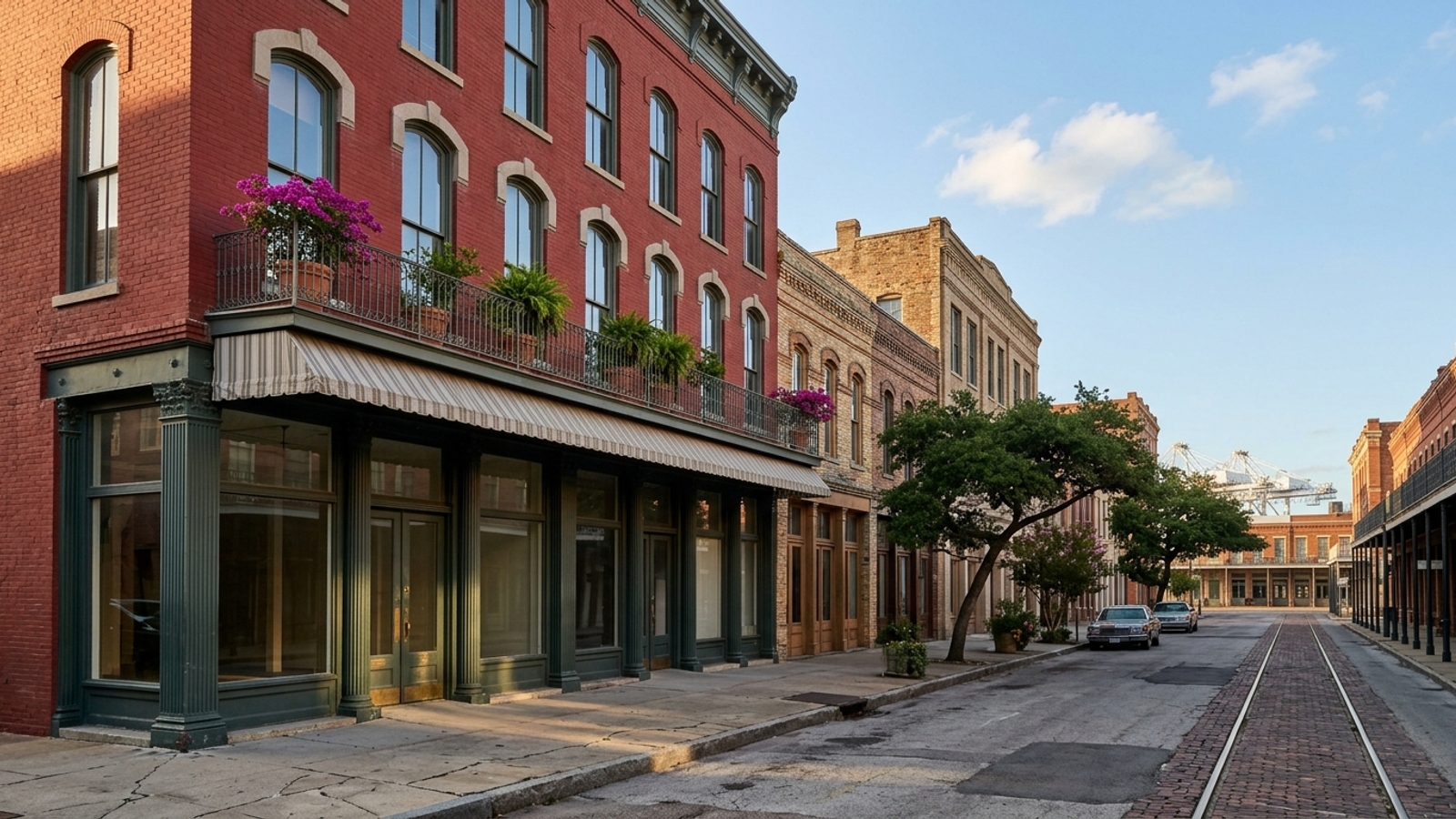
The housing market across Galveston, TX is sitting at a median sale price of roughly $375,000, with homes spending about 92 days on the market before they sell. If you're focused specifically on downtown as one of the best neighborhoods in Galveston, TX, you're looking at a different animal - historic architecture, varied pricing, and a lifestyle that has very little in common with a typical suburban purchase. This is the cultural center of the city, shaped by Victorian-era buildings and the kind of immediate waterfront access that most Galveston buyers are chasing.
Buying here means giving up the big suburban lot in exchange for walkability and proximity to just about everything. And with roughly 1,033 homes available across the broader city right now, you're not in a rush. That inventory gives you real leverage - but understanding exactly what downtown offers is how you figure out whether this particular environment is the right fit.
An Overview of the Downtown Area
The Strand Historic District is the anchor. Designated a National Historic Landmark District in 1976, it covers roughly five to six blocks near the waterfront and is built around Victorian-era commercial architecture that has held up better than most historic districts manage to. The Grand 1894 Opera House is there, along with a concentration of shops and museums that keeps the area genuinely active.
Residential properties sit close enough to that commercial core that daily errands don't require a car. The layout follows a structured grid - straightforward to navigate on foot or by bicycle, and easy to move between the waterfront and inland blocks.
How the Area Fits into Galveston
Downtown sits on the northern side of the island, facing the Galveston Channel rather than the open Gulf. That positioning matters for one practical reason: Interstate 45 is right there, which is your main route on and off the island to the mainland.
When buyers compare this district to other Galveston neighborhoods, commute time tends to come up quickly. Being centralized cuts down on driving to major employers like the local hospital systems - something worth running the numbers on before you settle on a location.
Housing Types and Prices in the District
Pricing here moves around more than you'd expect, so treat any single number as a snapshot rather than a floor or ceiling. The broader Galveston median is near $375,000, but downtown runs on its own track. February 2025 data showed a median sale price of $300,000 in the district - a 15.5% year-over-year decrease - at $343 per square foot. Fast-forward to May 2026, and median list prices had shifted to somewhere between $420,000 and $434,500, or roughly $258 to $263 per square foot.
That's a wide range over a short period. Different data providers will give you slightly different figures, and the time of year you're looking matters. Go in knowing that flexibility.
Property Characteristics
The housing stock is primarily historic single-family homes, restored townhouses, and loft-style condominiums carved out above commercial spaces. A lot of these buildings still have their original Victorian details - which is genuinely appealing until you have to maintain them. Specialized upkeep is part of the deal.
If you're looking at a condominium, run through the association fees carefully before you land on a monthly budget number. Across Galveston as a whole, homes are selling at about 93.9% of list price, which tells you there's room to negotiate - and that applies here.
Dining and Getting Around the District
The Strand Historic District keeps dozens of restaurants within a compact, walkable footprint. Seafood establishments, casual cafes, steakhouses - you can cover most of what you'd want without touching your car keys. That concentration of options is a real part of what daily life feels like in this part of the city.
For everyday dining, residents tend to rotate through places like Shark Shack Beach Bar & Grill, Little Daddy's Gumbo Bar, and Habano's Cafe. For seafood and steaks, Fisherman's Wharf, Willie G's Seafood & Steakhouse, Vargas Cut & Catch, and Katie's Seafood House all come up regularly. Sugar & Rye, Hearsay on The Strand, and Trattoria la Vigna round out the local staples.
Everyday Shopping and Services
The five to six blocks of The Strand serve as the primary retail corridor - local shops, museums, and basic services are mixed in alongside the restaurants. It's a compact footprint, but it covers more than you'd think.
Getting to other parts of the island is easy enough. The grid street system connects directly to the major thoroughfares, so once you're off The Strand you're moving efficiently.
Local Schools, Healthcare, and Climate
Healthcare access is one of the clearest practical advantages of living in this part of the island. UTMB Health's Galveston Campus is about 1.4 miles away at 301 University Blvd, and it's not a small community hospital. The campus includes John Sealy Hospital and Jennie Sealy Hospital - the latter opened in 2016 as a $438 million facility with 310 patient rooms and 60 ICU beds. UTMB runs a Level I Trauma Center there, one of only three in the entire Houston and Galveston region.
That's a meaningful thing to have 1.4 miles from your front door.
Galveston Independent School District
Downtown is served by the Galveston Independent School District (GISD), headquartered at 3904 Avenue T. The district runs 13 to 18 campuses covering pre-kindergarten through 12th grade. Its boundaries include the city of Galveston and Jamaica Beach, plus unincorporated areas like Port Bolivar and Crystal Beach. Students living in the downtown district feed into Ball High School for grades that go through 12th.
Gulf Coast Weather Patterns
The climate is humid subtropical - long, warm summers, mild winters, and the kind of coastal breeze that keeps summer from being completely unbearable. The tradeoff is the Atlantic hurricane season, which runs June through November every year without exception.
Before you close on anything here, review the local flood maps and sort out windstorm insurance. This isn't optional fine print - it's a real cost-of-ownership item on an island.
Buying a Home in the Neighborhood
Galveston is firmly in buyer's market territory right now. There are roughly 1,033 homes available citywide, supply sits at about 9.3 months, and homes are spending around 92 days on the market. You have time. Only about 3.3% of homes are selling above list price, which means the negotiating power is sitting on your side of the table.
In the downtown district specifically, where list prices have been running between $420,000 and $434,500, that negotiating room is worth using.
Working with a Local Professional
Historic homes and downtown condominiums come with their own set of inspections, insurance requirements, and in many cases association rules that aren't always obvious at first glance. A local agent who knows this inventory can help you read seller disclosures and get a realistic handle on what ownership costs month to month.
Get your mortgage pre-approval done before you start touring. It sharpens your budget, and when you find the right property, you'll be able to move without scrambling.
Frequently Asked Questions
What is Downtown Galveston known for?
The area is known primarily for The Strand Historic District, a National Historic Landmark District featuring Victorian-era commercial architecture. It spans about five to six blocks near the waterfront and serves as the cultural center of the city, housing shops, restaurants, and the Grand 1894 Opera House.
What are homes like in Downtown Galveston, and what do they cost?
The housing stock includes historic single-family homes, restored townhouses, and loft-style condominiums. Prices fluctuate; February 2025 data showed a median sale price of $300,000, while May 2026 data indicated median list prices between $420,000 and $434,500.
What restaurants and dining are in Downtown Galveston?
The district features numerous walkable dining options, ranging from casual cafes to steakhouses. Local establishments include Shark Shack Beach Bar & Grill, Little Daddy's Gumbo Bar, Habano's Cafe, Sugar & Rye, Fisherman's Wharf, and Katie's Seafood House.
What is the weather like in Downtown Galveston?
The area experiences a humid subtropical climate characterized by warm summers and mild winters. Because it's a coastal island community, residents experience regular sea breezes and face the annual Atlantic hurricane season.
What hospitals and medical care are near Downtown Galveston?
UTMB Health's Galveston Campus is located about 1.4 miles away at 301 University Blvd. The campus includes John Sealy Hospital and Jennie Sealy Hospital, and it operates one of only three Level I Trauma Centers in the Houston/Galveston region.
Does downtown Galveston have a beach?
Downtown sits on the northern side of the island facing the Galveston Channel, so it does not offer open Gulf beaches. Buyers specifically seeking direct ocean access often consult a beachfront Galveston, TX area guide to compare the different waterfront environments. The downtown district trades sandy shores for immediate proximity to historic commercial architecture and local museums.
How does downtown compare to other parts of the island?
Buyers frequently weigh the historic, walkable grid of downtown against other local districts to find the right fit. Reading a West End Galveston, TX area guide can help clarify the practical differences in commute times and property styles across the island. Being centralized near Interstate 45 gives downtown a distinct logistical advantage over neighborhoods located further out.

April Aberle
REALTOR ® | Mortgage Originator | Homes for Heroes Affiliate | April Aberle | REMAX Crossroads Realty
or another way