
Categories
GalvestonPublished October 5, 2026
Comparing the East End vs East End Historic District in Galveston, TX

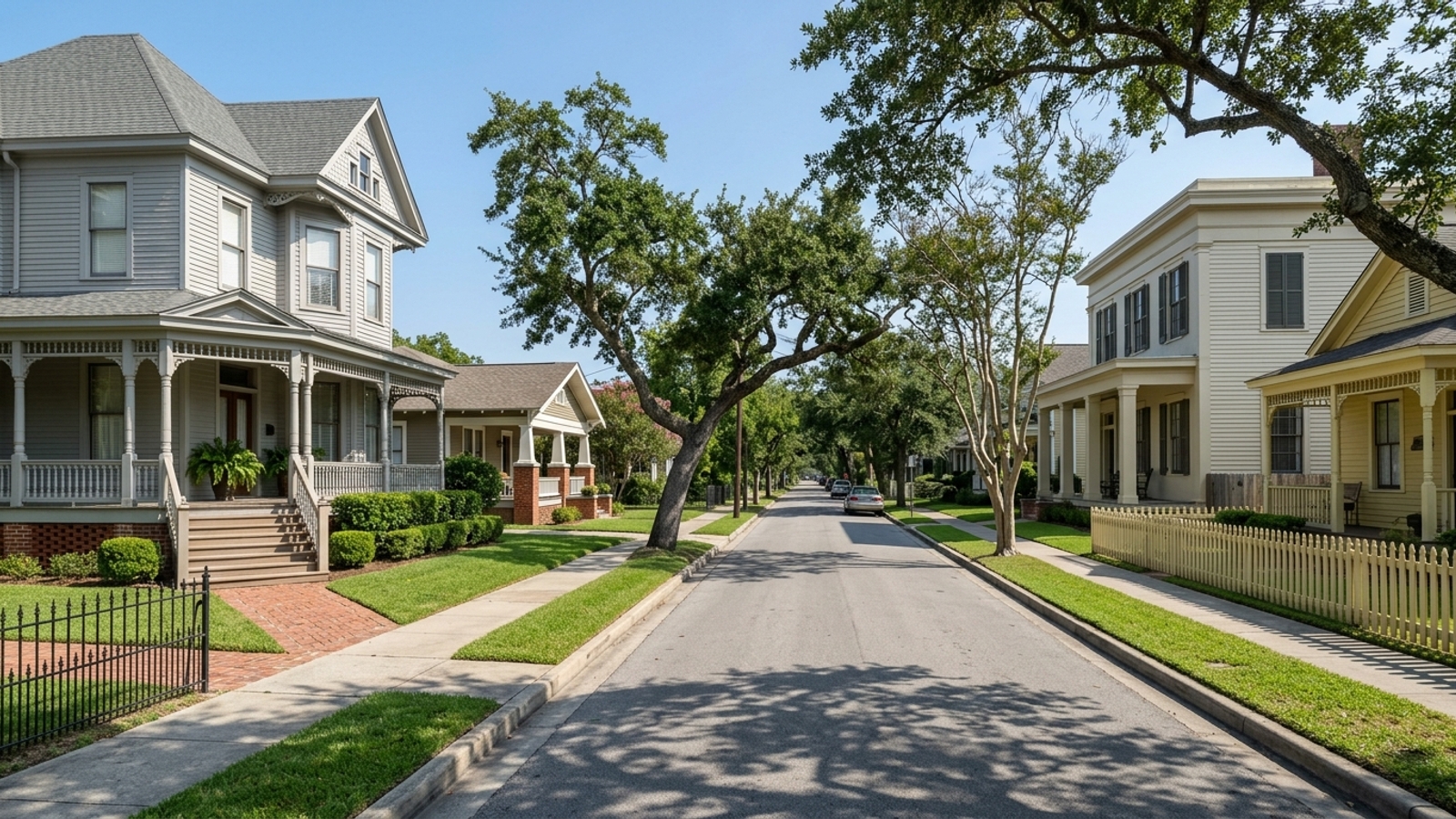
Galveston's eastern portion encompasses everything east of 19th Street - an area that includes the University of Texas Medical Branch (UTMB), Fish Village, Beachtown, and the East End Lagoon. Within that large footprint sits a smaller, specifically designated zone with its own rules and architectural standards.
Overlapping names on this eastern side of the island frequently confuse buyers evaluating the best neighborhoods in Galveston, TX. Knowing the physical boundaries and practical differences between these two areas will clarify property values, renovation requirements, and what you'll find on the market.
Defining the Boundaries in Galveston
The broader East End covers the entire eastern section of the island east of 19th Street - stretching all the way to the East End Lagoon and East Beach. That's a lot of ground.
Inside that broader region sits the East End Historic District, a specific zone strictly bounded by Broadway to the south, 10th Street to the east, Mechanic Avenue to the north, and 19th Street to the west. Those four streets are the lines that matter. Everything else in the East End - Fish Village, Beachtown, the UTMB campus - falls outside those historic boundaries, in the wider residential and institutional mix that makes up the rest of the eastern island.
Housing Styles and Architecture
What you're looking at changes dramatically depending on which side of that boundary line you're on. The historic zone gives you preserved late-19th-century estates; the surrounding areas give you modern coastal builds, mid-century ranches, and everything in between. The age gap between these two property types isn't just visual - it shows up directly in your maintenance budget.
Historic District Homes
Properties inside the East End Historic District are primarily older, preserved houses reflecting the late 19th and early 20th centuries. Greek Revival, Late Victorian, Queen Anne, and Craftsman are the styles you'll see concentrated on these specific blocks.
That age comes with real costs. Original wood siding, specialized windows, and period-specific roofing materials aren't cheap to maintain, and they're not something you can swap out for modern equivalents without running into the Commission first. Build that into your numbers before you fall in love with a porch.
Broader East End Properties
Outside the historic boundaries, you get a wider range. Newer construction, mid-century houses, multi-family properties - the broader East End has all of it. Beachtown features recently built coastal homes; Fish Village runs more toward mid-20th-century single-family houses. If you want the eastern side of the island without taking on a historic property, that variety is the practical case for looking here.
Renovation Rules and Local Regulations
This is where the two areas diverge most sharply, and it's where buyers sometimes get a surprise after they're already under contract.
Inside the designated historic boundaries, the Galveston Landmark Commission oversees exterior changes. Any project that alters the outside of a home requires Commission review, full stop. Homeowners must adhere to the city's "Design Standards for Historic Properties," which applies to additions, new construction, demolition, moderate repairs, and the replacement of architectural features. Minor repairs and some fencing work may get administrative approval directly from the Historic Preservation Officer, but assume exterior work means a formal review process before anyone picks up a hammer. That approval step needs to be in your renovation timeline, not an afterthought.
Properties in the broader East End don't fall under the Landmark Commission's jurisdiction. Homeowners there follow standard municipal building codes and any applicable homeowners association guidelines - a much more straightforward process.
Real Estate Prices and Market Trends
The median sale price for the city of Galveston sits around $375,000, with homes spending roughly 92 days on the market. But that number flattens out a real difference between the historic zone and the surrounding neighborhoods.
Inside the East End Historic District, the median sale price runs approximately $427,000 - about $242 per square foot. Median listing prices in this specific zone often reach around $555,000, or $266 per square foot. The broader East End comes in lower, with median listing prices between $329,000 and $330,000, though the average price per square foot is slightly higher at $273, reflecting the mix of newer coastal builds and smaller mid-century homes.
Across Galveston, you have negotiating room right now. The average sale-to-list ratio is approximately 93.9%, and the city has over 1,000 homes available. You don't have to rush either area.
Location and Local Amenities
Broadway Avenue, Market Street, and Postoffice Street are the main commercial corridors serving this part of the island - shopping, dining, and daily errands are accessible without crossing to Galveston's West End.
The eastern portion of Galveston carries a serious concentration of historical landmarks, many of them in or near the historic boundaries: Bishop's Palace, The Bryan Museum, Ashton Villa, Moody Mansion, and the Galveston Tree Sculptures are all here. For outdoor access, the broader East End includes the East End Lagoon Nature Preserve, Stewart Beach, East Beach, and Lindale Park.
UTMB's campus on the eastern side of the island is worth mentioning plainly: if you work at the hospital complex, living anywhere in this area puts you close. That holds whether you're inside the historic district or in the surrounding neighborhoods.
Frequently Asked Questions
What is the difference between the East End and the East End Historic District in Galveston, TX?
The East End refers to the entire eastern portion of Galveston island east of 19th Street. The East End Historic District is a smaller, specific zone within that area, bounded strictly by Broadway, 10th Street, Mechanic Avenue, and 19th Street.
Are there special rules for renovating homes in the East End Historic District in Galveston?
Yes. Any project changing the exterior of a historic district property requires review by the Galveston Landmark Commission. Homeowners must adhere to specific design standards for additions, repairs, and architectural replacements.
Is real estate more expensive in the East End Historic District compared to the broader East End?
Generally, yes. The median sale price in the historic district is around $427,000, with median listings often reaching $555,000. Median listing prices in the broader East End sit closer to $330,000.
What architectural styles are most common when buying a house in the Galveston East End?
Inside the historic boundaries, Greek Revival, Late Victorian, Queen Anne, and Craftsman are the most prominent styles. The broader East End features a wider mix, including mid-century homes and modern coastal construction.
Is Beachtown located inside the East End Historic District?
This community sits in the broader eastern section of the island, completely outside the designated historic boundaries. Buyers evaluating the recently built coastal homes in Beachtown will follow standard municipal building codes rather than the strict rules of the Landmark Commission.
Where else can buyers find coastal homes outside the historic district?
The broader East End offers some newer construction, but buyers frequently look toward the western side of the island for additional options. Expanding a property search to neighborhoods like Pirates Beach provides a wider variety of coastal builds without historic commission oversight.

April Aberle
REALTOR ® | Mortgage Originator | Homes for Heroes Affiliate | April Aberle | REMAX Crossroads Realty
or another way