
Categories
HomeownershipWhat do Galveston County homebuyers need to know about flood insurance?
If you're buying a beach home in Galveston County, flood insurance isn't optional in any practical sense. Federally backed lenders are required to mandate flood coverage when a property sits in a FEMA-designated Special Flood Hazard Area. Even cash buyers without a lender face real financial exposure along the Gulf Coast. Understanding your flood zone, your elevation certificate options, and how NFIP and private policies work together is part of the due diligence, not an afterthought.Key Takeaways
- Lenders with federally backed mortgages must require flood insurance on any structure in a FEMA Special Flood Hazard Area, Texas state law does not independently mandate it, but the federal rule applies statewide.
- As of March 2026, the Texas Water Development Board confirms an elevation certificate is no longer required to purchase NFIP flood insurance, but submitting one can still lower your premium.
- The City of Galveston requires all new construction and substantial improvements to be built at least 18 inches above Base Flood Elevation, that freeboard standard directly affects how a home is rated for insurance.
- Galveston County's Floodplain Permitting office (409-938-2411) can tell you whether an elevation certificate already exists for a property in the unincorporated county before you pay a surveyor to create one.
- Elevation certificates are one of the most useful due-diligence items you can request during the option period, they reveal flood risk and insurance implications before you're committed to the purchase.
Why does flood insurance matter so much on the Texas Gulf Coast?
The short answer: this is one of the most flood-exposed coastlines in the country, and the financial stakes are high enough that skipping this step can cost you far more than the coverage itself.Texas law does not independently require homeowners to carry flood insurance. But that's a narrow legal point that doesn't reflect the reality for most buyers. According to MoldInfo's Texas flood insurance guide, lenders must require flood insurance when a structure is located in a FEMA-designated Special Flood Hazard Area (SFHA) as a condition of a federally backed mortgage. SFHAs are defined as areas with at least a 1% annual chance of flooding, what most people call the 100-year floodplain.
On the Galveston coast, a large share of residential properties fall in or near those zones. That means most buyers financing a purchase here will face a lender requirement for flood coverage regardless of what state law says. And for cash buyers, the absence of a legal mandate doesn't mean the absence of risk, FEMA maps exist precisely because the exposure is real.
I always walk my coastal buyers through flood zone status before we even start seriously evaluating a property. Knowing whether you're in Zone AE or Zone VE, and what Base Flood Elevation applies, changes the insurance picture significantly, and it's information you want before you fall in love with a place.
How do you find out if a Galveston County property is in a flood zone?
Start at the FEMA Flood Map Service Center, where you can look up any address to find its flood map panel, effective date, and designated zone. For properties inside the City of Galveston, the local floodplain office can confirm the zone and the applicable Base Flood Elevation. The City of Galveston's Flood Protection Information page is a practical starting point for city-limit properties.For properties in unincorporated Galveston County, areas like parts of Bolivar Peninsula, Tiki Island, Bayou Vista, and Jamaica Beach, the county's Engineering and Floodplain office handles zone determinations. You can reach Galveston County Floodplain Permitting at 409-938-2411.
What's the difference between NFIP and private flood insurance?
The National Flood Insurance Program (NFIP), administered by FEMA, is the most common source of flood coverage for residential properties in high-risk zones. Most lenders accept NFIP policies to satisfy their flood insurance requirement. Private flood insurance has grown as an alternative, private carriers can sometimes offer higher coverage limits, different exclusions, or more competitive pricing depending on the property's elevation and risk profile. Both options are worth quoting, and your insurance agent can help you compare them for a specific property. The Texas Water Development Board's NFIP page is a reliable starting point for understanding how the federal program works in Texas.One timing detail that catches buyers off guard: new NFIP policies typically carry a 30-day waiting period before coverage takes effect. That means you can't wait until a storm is forming in the Gulf to buy a policy. Plan ahead, and factor the effective date into your closing timeline.
What is an elevation certificate and do you need one?
An elevation certificate (EC) is a document that records a building's location, lowest floor elevation, flood zone, and other characteristics relative to Base Flood Elevation. It's completed and sealed by a licensed surveyor, architect, or engineer, and it's one of the primary tools insurance agents use to rate flood policies accurately.Here's the current rule as of early 2026, per the Texas Water Development Board: an elevation certificate is no longer required to purchase NFIP flood insurance. But it can still be submitted to your insurance agent and used if it will lower your premium. That distinction matters. A well-elevated property, one where the lowest floor sits significantly above Base Flood Elevation, can see meaningful premium differences compared to a property that just barely meets the minimum standard. The EC is how your insurer confirms that elevation.
For properties in high-risk zones like Zone AE or Zone VE, the Texas Water Development Board's Quick Guide explains that the EC shows whether ground and buildings are properly elevated above BFE, and that information directly affects how an agent writes and rates your policy.
My detailed breakdown of how elevation certificates work in practice is in my Galveston Coast Elevation Certificate Buyer Guide, worth reading before you make an offer on a coastal property.
How do you get an elevation certificate for a Galveston County property?
Before you pay a surveyor to prepare a new one, check whether one already exists. Here's the order I recommend for my buyers:- Ask the seller. Elevation certificates often travel with building permits, prior insurance files, and new-construction compliance paperwork. Many coastal sellers already have one. TexasFloodInsurance.org confirms this as a standard first step.
- Contact the local floodplain administrator. For City of Galveston properties, the city's floodplain office may have a certificate on file. For unincorporated county properties, call Galveston County Floodplain Permitting at 409-938-2411. Note that the State of Texas does not keep elevation certificates on file centrally, it's a local record.
- Check the property deed or builder records. Especially for newer construction, an EC may have been prepared as part of the permit process.
- Commission a new one if needed. If no EC exists, you can hire a licensed land surveyor, professional engineer, or certified architect to prepare one. This is a due-diligence expense worth factoring into your purchase planning.
What is the City of Galveston's 18-inch freeboard rule?
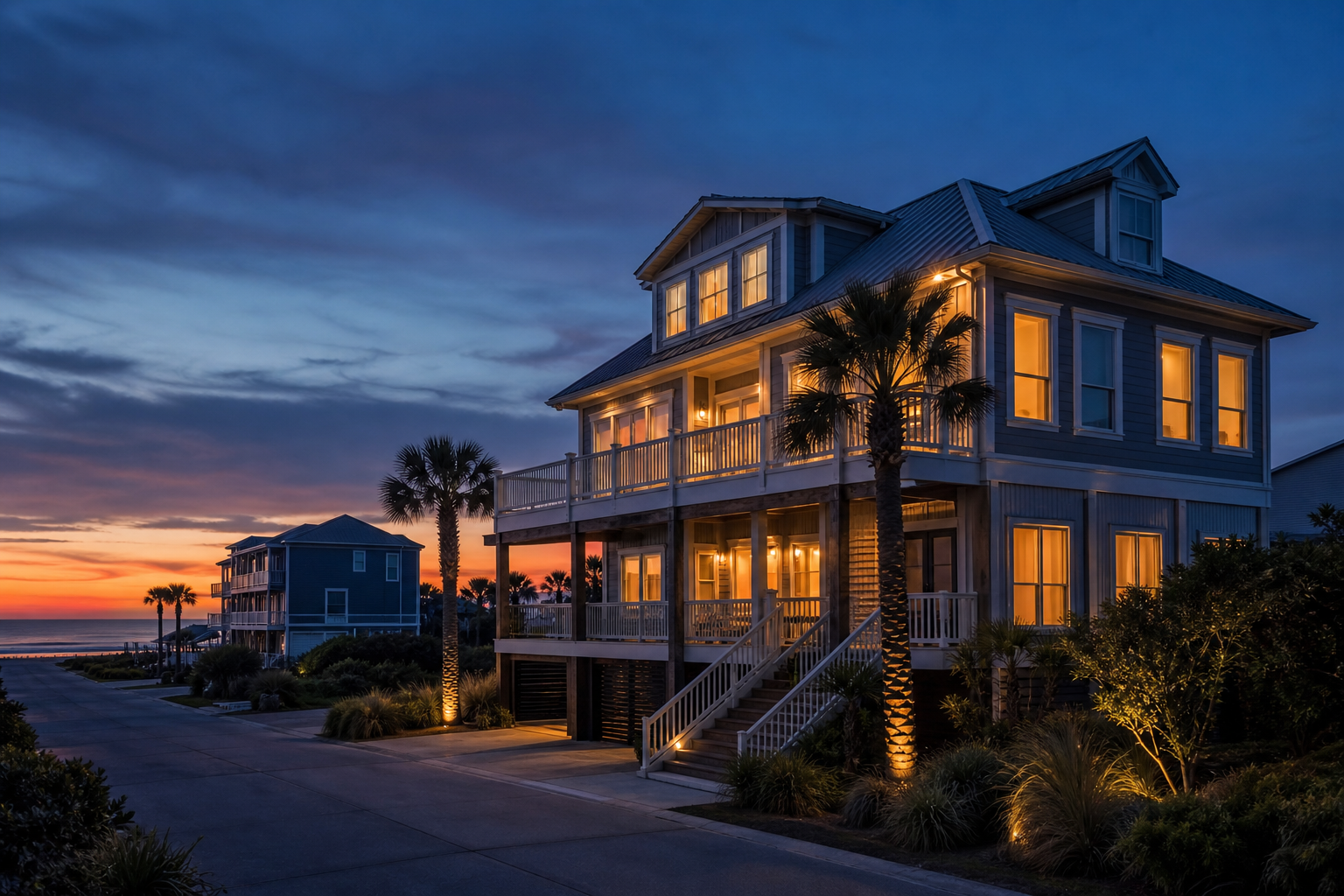
The City of Galveston requires all new construction and substantial improvements to be built at least 18 inches above Base Flood Elevation, this is what's called a freeboard standard, and it's more protective than the national minimum. Per Galveston Ordinance No. 25, new residential construction must have its lowest floor elevated a minimum of 18 inches above BFE. New non-residential construction must either meet the same elevation standard or be floodproofed to that level, with certification submitted by a registered professional engineer, architect, or land surveyor.What this means for buyers: a home built to Galveston's local standard sits higher above BFE than the federal minimum requires. That elevation difference is visible on the elevation certificate and can affect how your flood policy is rated. Homes on pilings that meet or exceed the local freeboard standard may have a different risk profile than older structures that were built to earlier, less protective standards, but the only way to know where a specific property stands is to review its EC or have one prepared.
How flood insurance, windstorm coverage, and homeowners policies fit together
This is where a lot of Gulf Coast buyers get surprised. A standard homeowners policy does not cover flood damage. Flood insurance is a separate policy, either through NFIP or a private carrier. And on the Texas Gulf Coast, windstorm coverage adds a third layer.The Texas Windstorm Insurance Association (TWIA) is the insurer of last resort for wind and hail coverage in the Gulf Coast counties, including Galveston County. Many standard homeowners carriers either exclude windstorm in coastal areas or price it in ways that make TWIA the practical option. So a typical coastal home in Galveston County may carry three separate policies: a standard homeowners policy (fire, liability, personal property), a TWIA windstorm policy, and an NFIP or private flood policy.
Each policy covers different perils, carries its own deductible, and has its own claims process. Understanding how they interact, and making sure there are no gaps in coverage, is something I walk my coastal buyers through as part of the purchase process. The Texas Department of Insurance has consumer resources that explain the TWIA program and what it covers.
If you're also thinking about the broader picture of preparing a coastal property for storm season, my post on preparing your Galveston County home for hurricane season covers the practical steps.
| Coverage Type | What It Covers | Typical Source on the Galveston Coast | Required By |
|---|---|---|---|
| Homeowners Insurance | Fire, theft, liability, personal property (not flood or wind in coastal areas) | Private insurer | Lender (all mortgaged properties) |
| Flood Insurance | Flood damage to structure and contents | NFIP or private flood carrier | Lender (SFHA properties with federally backed mortgage) |
| Windstorm Insurance | Wind and hail damage | TWIA or private carrier | Often required by lender in Galveston County; varies by policy |
Frequently Asked Questions
Do I have to buy flood insurance for a Galveston beach house if it's already on pilings?
Being on pilings does not automatically exempt a property from flood insurance requirements. If the home is in a FEMA Special Flood Hazard Area and you're financing with a federally backed mortgage, your lender is required to mandate flood coverage regardless of the construction style. Pilings can improve a home's elevation above Base Flood Elevation, which may affect how the policy is rated, but that's a separate question from whether coverage is required. The elevation certificate for the specific property will show where the lowest floor sits relative to BFE, which is what matters for both compliance and pricing.How can I check a Galveston County property's FEMA flood zone before making an offer?
Use the FEMA Flood Map Service Center to look up any address and find its flood zone designation and map panel. For properties inside the City of Galveston, the city's floodplain office can confirm the zone and applicable Base Flood Elevation. For unincorporated county properties, contact Galveston County Floodplain Permitting at 409-938-2411. I pull this information for my buyers early in the process, before we get emotionally invested in a property.Where do I get an existing elevation certificate for a Galveston County property?
Start by asking the seller, elevation certificates often travel with prior insurance files and building permits. If the seller doesn't have one, contact the local floodplain administrator: the City of Galveston's floodplain office for city-limit properties, or Galveston County Floodplain Permitting at 409-938-2411 for unincorporated areas. Per the Texas Water Development Board, the State of Texas does not keep elevation certificates on file centrally, it's a local record. If none exists, a licensed land surveyor, professional engineer, or certified architect can prepare one.If Texas doesn't require flood insurance by law, why is my lender insisting on it?
Texas state law does not independently mandate flood insurance, but federal rules require lenders to mandate it when a property is in a FEMA-designated Special Flood Hazard Area and the loan is federally backed, and most conventional, FHA, and VA loans fall under that umbrella. The lender isn't making a discretionary choice; they're complying with a federal requirement that applies nationwide, including in Texas. According to MoldInfo's Texas flood insurance guide, this federal mandate applies specifically to structures in mapped SFHAs as a condition of the mortgage.What's the difference between NFIP flood insurance and a private flood policy for a Gulf Coast home?
NFIP flood insurance is the federal program administered by FEMA and is accepted by virtually all lenders to satisfy flood insurance requirements. Private flood insurance is issued by non-federal carriers and can offer higher coverage limits, different exclusions, and sometimes more competitive pricing for well-elevated properties. Both options are worth quoting for a Galveston County coastal home, the right choice depends on the property's flood zone, elevation, and your coverage needs. Your insurance agent can run quotes on both; just confirm that any private policy meets your lender's requirements before you commit.The bottom line for any Galveston County coastal buyer is this: flood zone, elevation certificate, and insurance stack are not paperwork details, they are core to understanding what you're buying and what it will cost to own it. Getting these questions answered before you're under contract puts you in a much stronger position.
I work with buyers across Galveston County, Jamaica Beach, Tiki Island, Bayou Vista, Crystal Beach, and the broader Southeast Texas Gulf Coast on exactly these questions. If you're evaluating a coastal property and want to understand what the flood zone and elevation data mean for your purchase, reach out and let's talk through it before you make an offer.
Equal Housing Opportunity. April Aberle, Real Estate Sales Agent, licensed by the Texas Real Estate Commission (TREC). TREC Consumer Protection Notice | TREC Information About Brokerage Services. Each office is independently owned and operated. This article is general information only and is not legal, tax, or financial advice. Confirm your specific insurance requirements, coverage costs, and flood zone status with your title company, insurance agent, lender, and tax advisor.