
Categories
GalvestonPublished February 14, 2026
Life on the Island: Is Moving to Galveston Right for You?

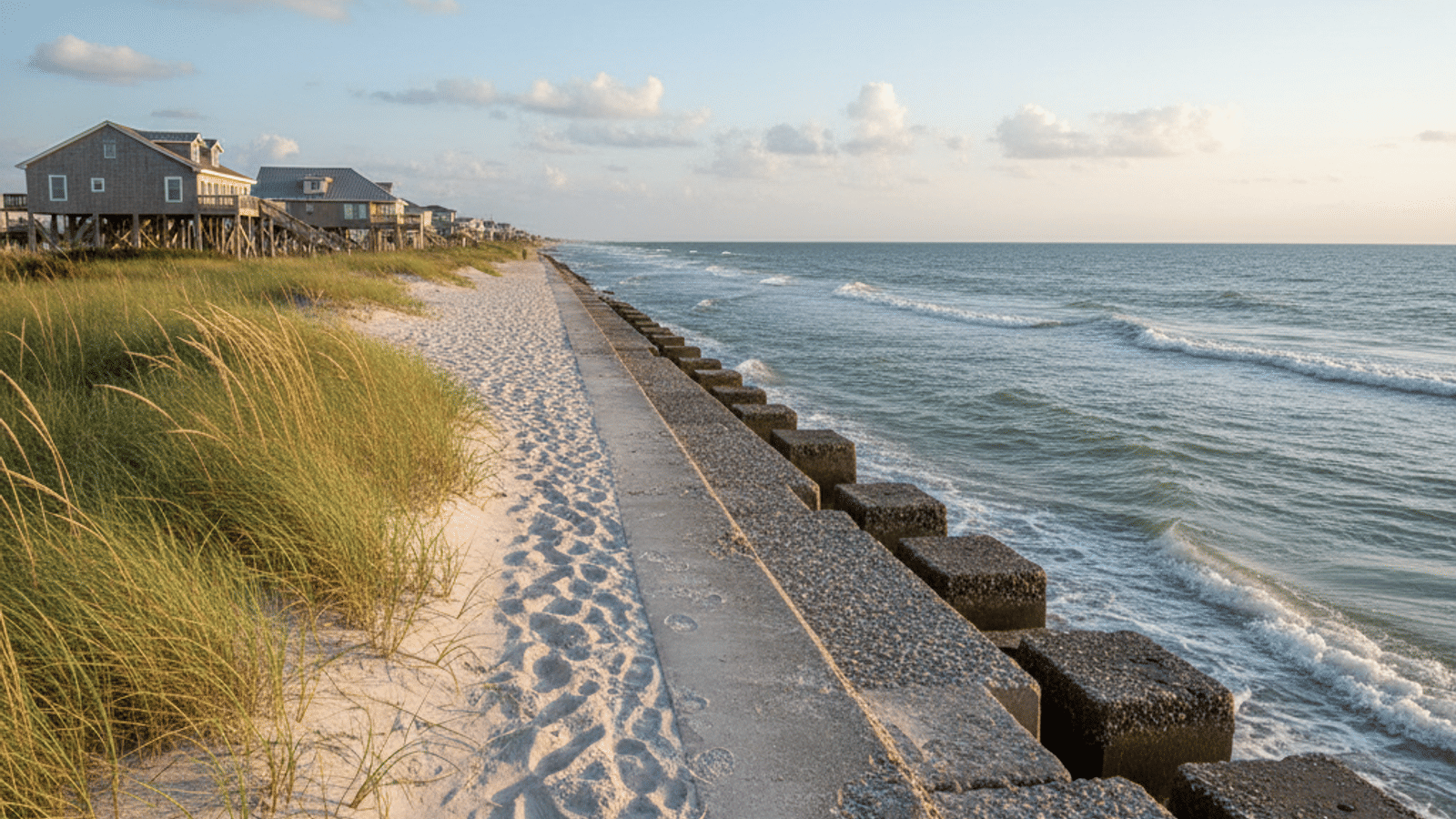
If you’re thinking about moving to Galveston, TX, you probably already know it’s not your typical beach town. It’s got a gritty, charming soul that you don’t find in the polished resort communities of Florida or California. For Houstonians, it’s a weekend getaway, but for those of us who live here, it’s a small town with a big history and an even bigger personality.
The first thing you need to understand is "Island Time." It’s a real thing. Life moves slower here. People are generally friendlier and more willing to chat in the grocery line, but that also means contractors and services might run on a looser schedule than you’re used to in the city. It’s a trade-off most of us are happy to make for the sound of the ocean.
There is also a distinct social line between "BOI" (Born on Island) and "IBC" (Islander by Choice). If you weren't born at UTMB or St. Mary’s, you will always be an IBC. Don’t worry, though—the community is welcoming to newcomers, especially now in 2026 as we see more remote workers and full-timers settling in to enjoy the coastal perks without the massive price tag of other waterfront cities.
Cost of Living: Affordable Homes vs. Hidden Costs
When you look at the sticker price of homes here, it’s easy to get excited. The overall cost of living runs about 4–10% lower than the national average, which is a huge draw for people relocating from the coasts or even from the pricier parts of Houston.
As of early 2026, the housing market has stabilized a bit. You can still find decent median home prices in the $280,000 to $315,000 range. That buys you a lot of character here, whether it’s a bungalow near the Seawall or a raised home further west. However, the mortgage is only half the story.
The "Insurance Trap"
This is the most critical conversation I have with buyers. In some zones, your monthly insurance bill can actually rival your principal and interest payment. Because of our location in the Gulf, you aren't just buying a house; you're managing risk. Between windstorm, flood, and general homeowners policies, the carrying costs are high.
Daily Expenses
Beyond housing, daily life is reasonably priced, though you pay a "logistics tax" on some things because they have to be trucked over the Causeway.
- Rent: Expect to pay between $1,100 and $1,300 for a decent one-bedroom apartment.
- Groceries: Slightly higher than the mainland, but we have decent access to big-box stores.
- Utilities: Texas has deregulated electricity, so you can shop around for providers, but keep in mind that air conditioners run hard here 10 months out of the year.
Understanding the Elements: Hurricanes, Floods, and Insurance
If you plan on living in Galveston, you have to respect the water. Hurricane season runs from June through November, and the local mindset is always "when, not if." After the active storm seasons we saw in 2024 and 2025, everyone is very aware of their preparation plans.
Flood Zones and Elevation
Not all ground is created equal here. You’ll hear terms like "X Zone" (areas with minimal flood risk, often behind the Seawall) and "VE Zone" (coastal high hazard areas). Living behind the Seawall offers a significant layer of protection against storm surge, which is why insurance rates there are generally more manageable.
Street Flooding
You don’t need a hurricane to see water in the streets. High tides combined with heavy rain can cause street flooding, particularly on Harborside Drive and parts of downtown. It’s common knowledge to move your car to higher ground (like the center of the street or a parking garage) when a heavy tide is predicted.
The Insurance Trifecta
To be fully protected, most homeowners carry three separate policies:
- Homeowners Insurance: Covers fire, theft, and liability.
- Windstorm Insurance: Usually through TWIA (Texas Windstorm Insurance Association). Rates rose about 10% recently, so budget accordingly.
- Flood Insurance: Usually through the NFIP. Even if you aren't in a high-risk zone, this is smart to have.
Best Neighborhoods in Galveston: East End, West End, and In-Between
Galveston is long and narrow, and the "vibe" changes drastically depending on which mile marker you’re at. Here is how the island breaks down for residents.
East End Historic District
This is the postcard version of Galveston. You’ll find incredible Victorian architecture, towering oak trees, and high walkability to The Strand and downtown shops. It’s tight-knit and charming. The catch? Historic homes require a lot of maintenance, and preservation rules can be strict regarding renovations.
Fish Village (Lindale Park)
Located near the ferry landing and closely tied to the university, Fish Village has a very suburban, neighborhood feel. It is incredibly popular with UTMB staff and medical students because you can bike to campus. The homes are mostly mid-century ranchers, and it’s known for being quiet and accessible.
Midtown / Denver Court
If you want a "local" feel that is away from the cruise ship tourists but not as far out as the beach houses, this is the sweet spot. You get diverse housing styles and accessible pricing. It’s where a lot of the full-time residents live, offering easy access to schools and grocery stores.
West End (Pirates Beach, Jamaica Beach)
Once you pass the end of the Seawall, you’re in the West End. This area feels like a permanent vacation with canal homes and houses on stilts. It’s beautiful and quiet, but you are further away from the main grocery stores and the hospital. It’s also much more susceptible to storm surge and erosion.
Job Market and Commuting
The island’s economy is anchored by one giant: UTMB Health (University of Texas Medical Branch). It is the driving force of employment here, employing thousands of doctors, nurses, researchers, and support staff. If you work in healthcare, this is a prime location.
Outside of medicine, the economy leans heavily on tourism, hospitality, and the Port of Galveston. We also have a strong educational sector with Texas A&M Galveston. The job market is generally stable, with unemployment tracking closely with state averages.
The Commute to Houston
Plenty of people live on the island and commute north. The drive to the refineries in Texas City is a breeze—maybe 20 minutes. Commuting to downtown Houston is a different animal. It’s about 45–60 minutes without traffic, but I-45 is notorious for construction and bottlenecks.
Remote work has exploded here by 2026. Most neighborhoods have reliable internet (Xfinity is standard, with fiber expanding), making the island a viable home office with a view. Just check the connection speeds at a specific address before you sign a lease.
Living Like a Local: Culture, Food, and Events
Living here is very different from visiting for a weekend. The off-season (winter) is actually many locals' favorite time of year. The humidity drops, the tourists leave, and the island feels like a small, cozy town.
However, you have to be ready for the crowds. Summer weekends, Mardi Gras in February, and the Lone Star Rally in November bring hundreds of thousands of people to the island. Traffic can stop completely, and restaurants get packed. You learn to navigate the back roads pretty quickly.
The Food Scene
We eat well here. Because of our history, the food scene is a mix of fresh Gulf seafood, Cajun influence from our Louisiana neighbors, and old-school Italian roots. You aren't getting frozen fish here; you're getting shrimp and oysters caught a few miles away.
Outdoor Life
If you love the outdoors, you'll never be bored. Fishing, birding, and kayaking are world-class. A note for newcomers: The water in Galveston is usually "brown." This isn't pollution; it's nutrient-rich silt from the Mississippi and Trinity rivers. It’s safe and full of marine life, even if it isn't Caribbean blue.
Schools and Education
For those moving with students, the Galveston Independent School District (GISD) operates on a "schools of choice model". rather than strict zoning based on your address, you can apply to magnet programs that focus on things like STEM or Coastal Studies.
For higher education, the island punches above its weight class. Between the medical research at UTMB, the marine sciences at Texas A&M Galveston, and the programs at Galveston College, there is a strong academic undercurrent to the city.
Summary: Pros and Cons of Living in Galveston
Here is the quick rundown to help you decide if the island life is worth it.
Pros:
- Walkable historic neighborhoods with unique architecture.
- Constant ocean breeze and easy beach access.
- Strong sense of community and identity.
- Housing prices are affordable compared to most US coastal cities.
Cons:
- High humidity and aggressive mosquitoes.
- Insurance costs can be double or triple what you pay inland.
- Saltwater corrosion eats cars and air conditioning units quickly.
- The anxiety of watching the tropics during hurricane season.
FAQ: Moving to Galveston
Is Galveston a good place to live for remote workers?
Yes, it is becoming very popular for remote work. Internet infrastructure is generally reliable in the main neighborhoods, and the lower cost of living allows for a great work-life balance near the beach. Just make sure to verify the internet provider options for your specific street.
How much does flood insurance cost in Galveston?
Costs vary wildly based on your zone and elevation. A home in an "X Zone" might pay $600–$900 a year, while a ground-level home in a high-risk zone could easily see premiums between $2,500 and $5,000+ annually. Always ask for the current policy claims history before buying.
Is the water in Galveston safe to swim in?
Yes, the water is generally safe. The brown color comes from river sediment (sand and silt) churning in the water, not sewage or dirt. However, locals do check the "Texas Beach Watch" advisories for occasional high bacteria levels after heavy rainstorms.
What is the commute like from Galveston to Houston?
It depends on where in Houston you are going. Reaching the south side or Hobby Airport is usually an easy 40–50 minutes. Reaching downtown or the north side during rush hour can take over an hour or more due to traffic on the Causeway and I-45 construction.

April Aberle
REALTOR ® | Mortgage Originator | Homes for Heroes Affiliate | April Aberle | REMAX Crossroads Realty
or another way